Knowledge

On a lithium battery production line, the film wrapping tester is the last insulation defense line before PACK assembly. Once the applied film has bubbles, wrinkles or out-of-tolerance dimensions, the result ranges from yield decline and increased rework to defective cells flowing into the module stacking stage, planting hidden safety hazards. For battery manufacturers, the yield stability and fault downtime of this process directly affect the overall cost of the production line.
This case is an application of Solidot IO-Link bus I/O on a film wrapping tester, focusing on how it stabilizes process accuracy and yield in terms of I/O communication, and how it assists operation and maintenance in minimizing downtime losses when equipment problems occur.
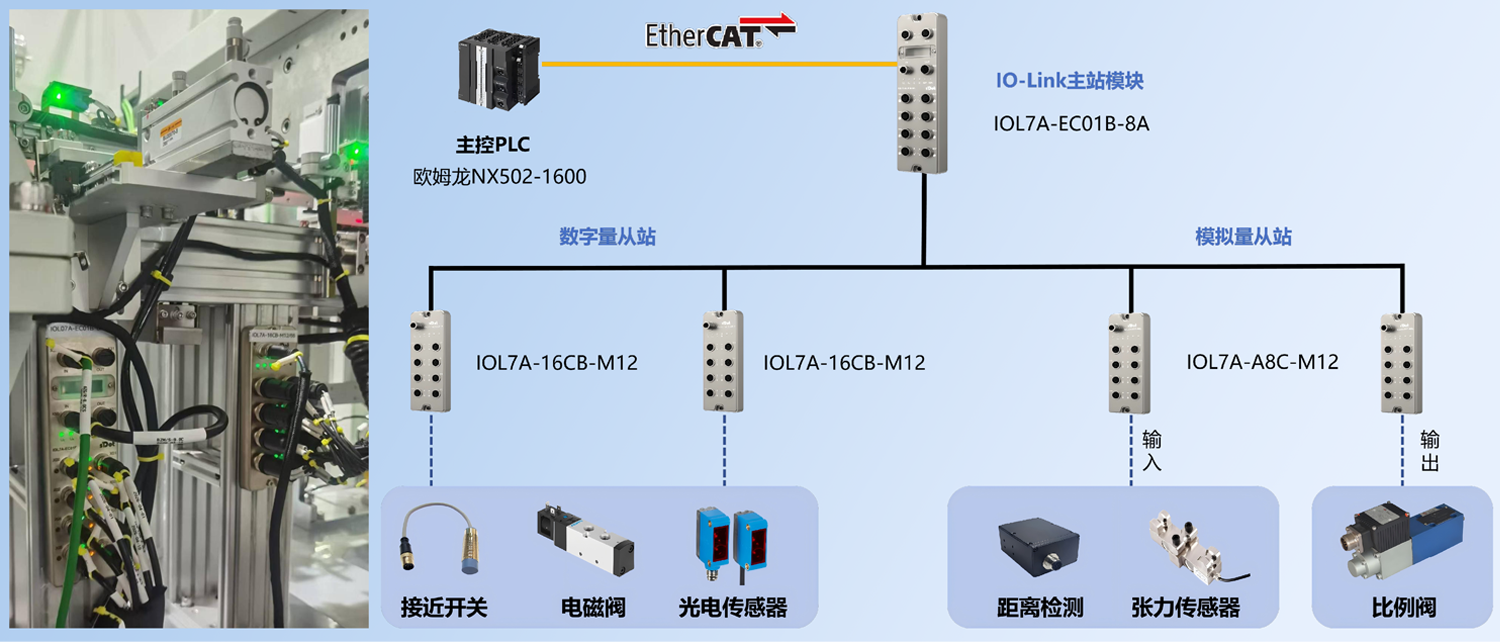
IP67 IO-Link bus I/O products used in this case
(IO-Link Master, EtherCAT protocol)
(IO-Link HUB, 16-channel digital configurable, PNP)
(IO-Link HUB, 8-channel voltage/current input/output compatible)
1. Equipment and process
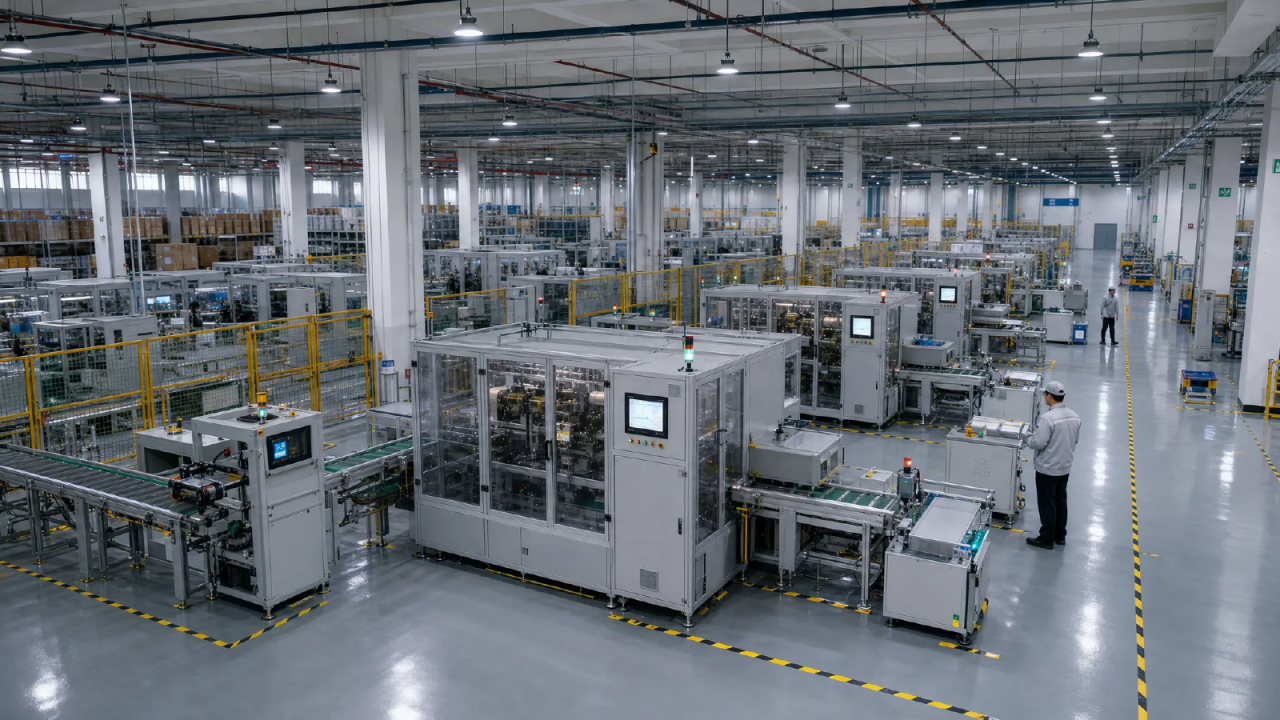
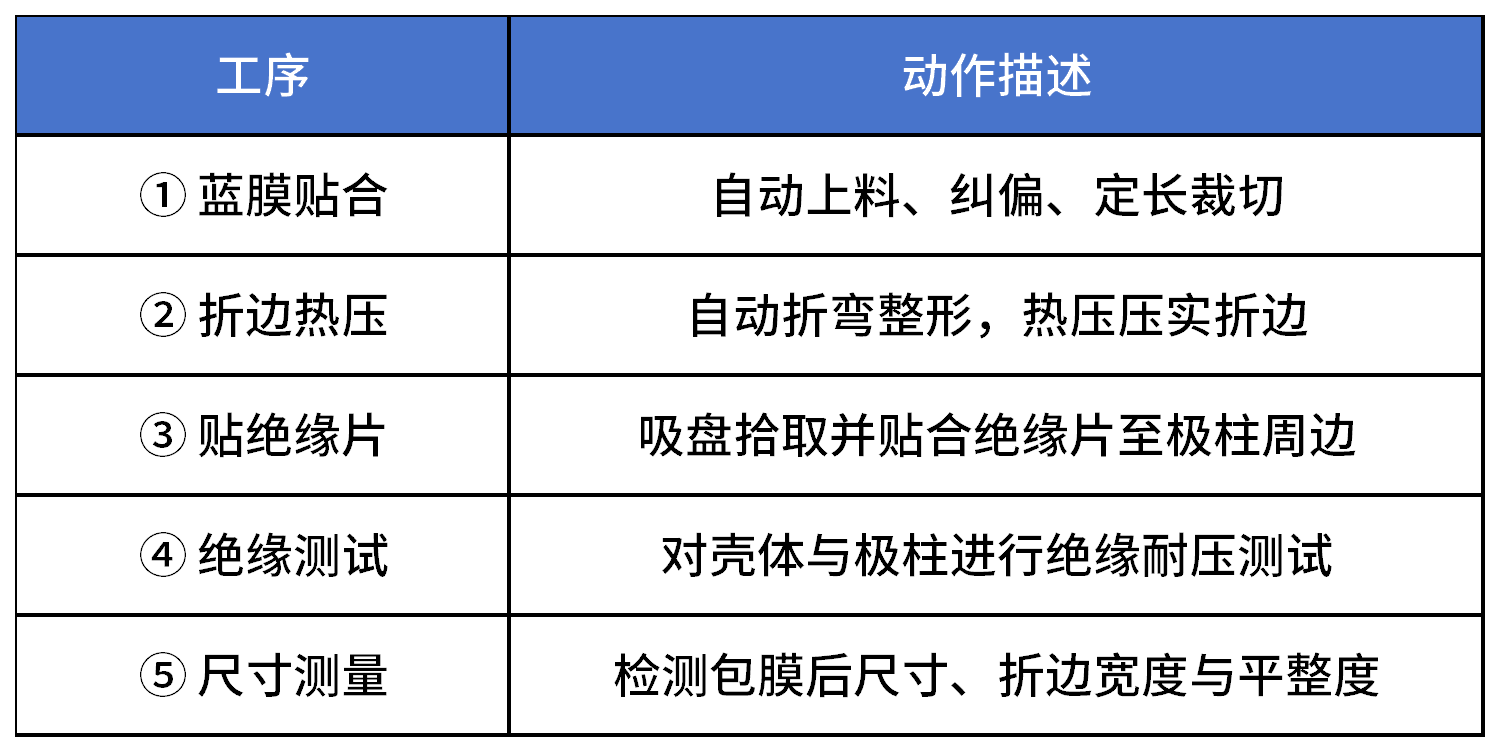
The film wrapping tester is a dedicated insulation protection device in lithium battery production lines. Its core function is to automatically wrap aluminum-shell cells with insulating Mylar film, attach top insulation sheets, and complete insulation withstand voltage testing and dimension measurement inline.
The equipment process flow covers five consecutive operations—
2. I/O Communication Characteristics
From the perspective of production line operation and maintenance, the equipment has two unavoidable pain points in automated control, corresponding to the two key aspects of "yield" and "downtime".
Pain point 1: Film wrapping and inspection accuracy directly determine yield; signal transmission rate must be guaranteed
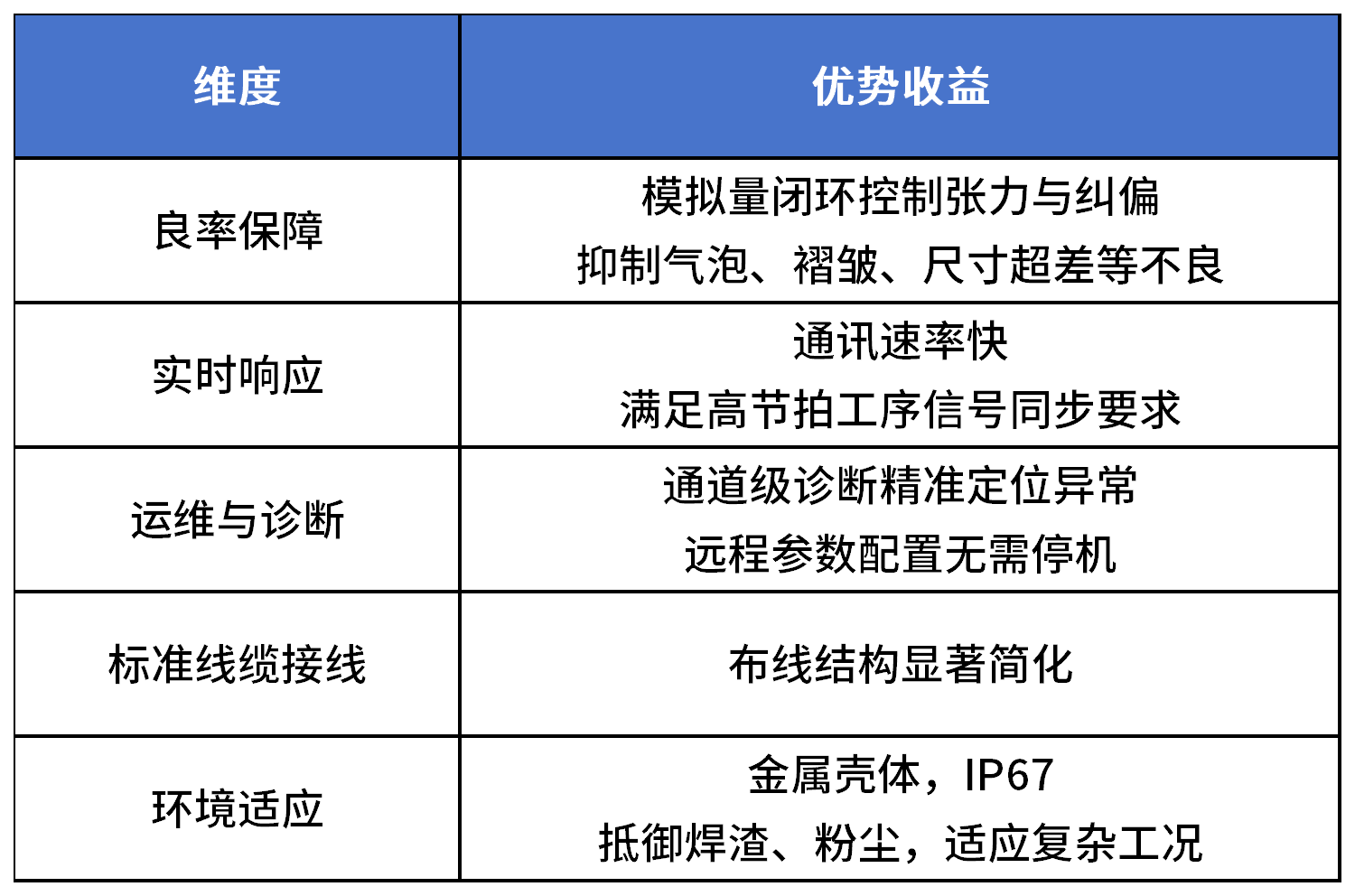
Film unwinding tension directly affects film application flatness and edge folding quality, while dimension measurement data determines good-product judgment. These are continuous analog signals with high requirements for acquisition accuracy and real-time performance—any signal delay or interference may increase defect rates such as film bubbles, wrinkles and out-of-tolerance dimensions. The system must continuously ensure stable acquisition and precise output of analog signals under high-cycle operation.
Pain point 2: Digital and analog signals are mixed, making fault location slow and maintenance costs high
The five stations are distributed with a large number of digital signals—cell positioning, film in place, cylinder actuation, suction cup negative pressure, inspection probe lifting, defective product rejection, etc.—with dense signal points; at the same time, continuous analog signals such as film unwinding tension, deviation correction accuracy, proportional valve pressure and dimension measurement values have high accuracy requirements. Once a signal anomaly occurs, troubleshooting often requires checking line by line and point by point, resulting in long downtime and a high maintenance threshold.
3. Solidot IO-Link bus I/O Solution
To address the above pain points, Solidot IO-Link bus I/O is used, connected to an Omron NX502-1600 PLC via the EtherCAT bus.
Master level:
IOL7A-EC01B-8A connects directly to the NX502-1600 via EtherCAT, handling the aggregation and forwarding of IO-Link communication, and supporting real-time status diagnostics and remote parameter configuration.
Digital slave:
IOL7A-16CB-M12 is deployed close to each process station. Its 16 configurable DI/DO channels provide a unified connection for proximity switches, photoelectric sensors, solenoid valves and other devices, covering all digital signal acquisition and actuator control from loading to unloading.
Analog slave:
IOL7A-A8C-M12 is deployed at the film unwinding and dimension measurement stations. Its 8 channels are compatible with voltage/current input and output, acquiring data from tension sensors and the dimension inspection system. At the same time, it outputs analog control signals to drive proportional valves and web-guiding actuators, achieving closed-loop control of tension and lamination accuracy.
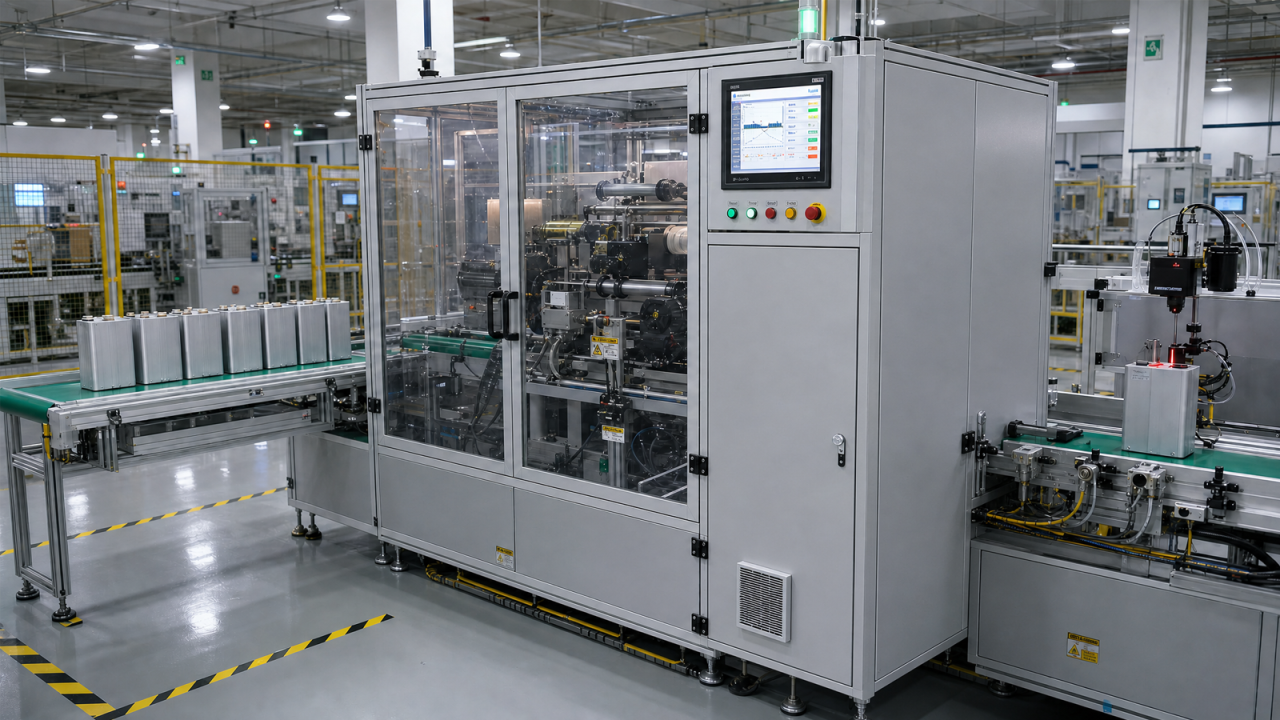
4. Solidot IO-Link bus I/O
Solidot IO-Link bus I/O is currently available in two protection ratings, IP67 and IP20: the IP67 models are IOL7A (metal housing) and IOL7B (plastic housing); the IP20 model is IOL5, with an optional dust cover.
The products come in a variety of form factors and can be flexibly selected to suit on-site conditions. They support mainstream bus protocols such as EtherCAT and PROFINET and provide acquisition solutions for multiple signal types including digital and analog, making them widely used in demanding industrial applications such as lithium battery, 3C and automotive manufacturing.