Knowledge

Application of Solidot PROFINET protocol products in the logistics
In today's society, almost everyone owns a smartphone, which has brought unprecedented convenience to our lives. The most typical example is shopping on e-commerce platforms. The reason we can receive our orders so quickly after placing them lies in the advanced logistics industry — especially for packages such as fresh produce that are difficult to transport over long distances, which are safeguarded throughout the process by intelligent, digital, refrigerated three-dimensional warehouses in the logistics chain.
When it comes to intelligence and digitalization, remote I/O naturally plays an essential role. Realtime Technology's remote I/O modules have mature deployment experience in the scenarios above, providing the industry with multiple high-quality solutions. This article will detail the application of Realtime Technology's PROFINET network remote I/O in logistics warehousing.
Common logistics sorting equipment and site description
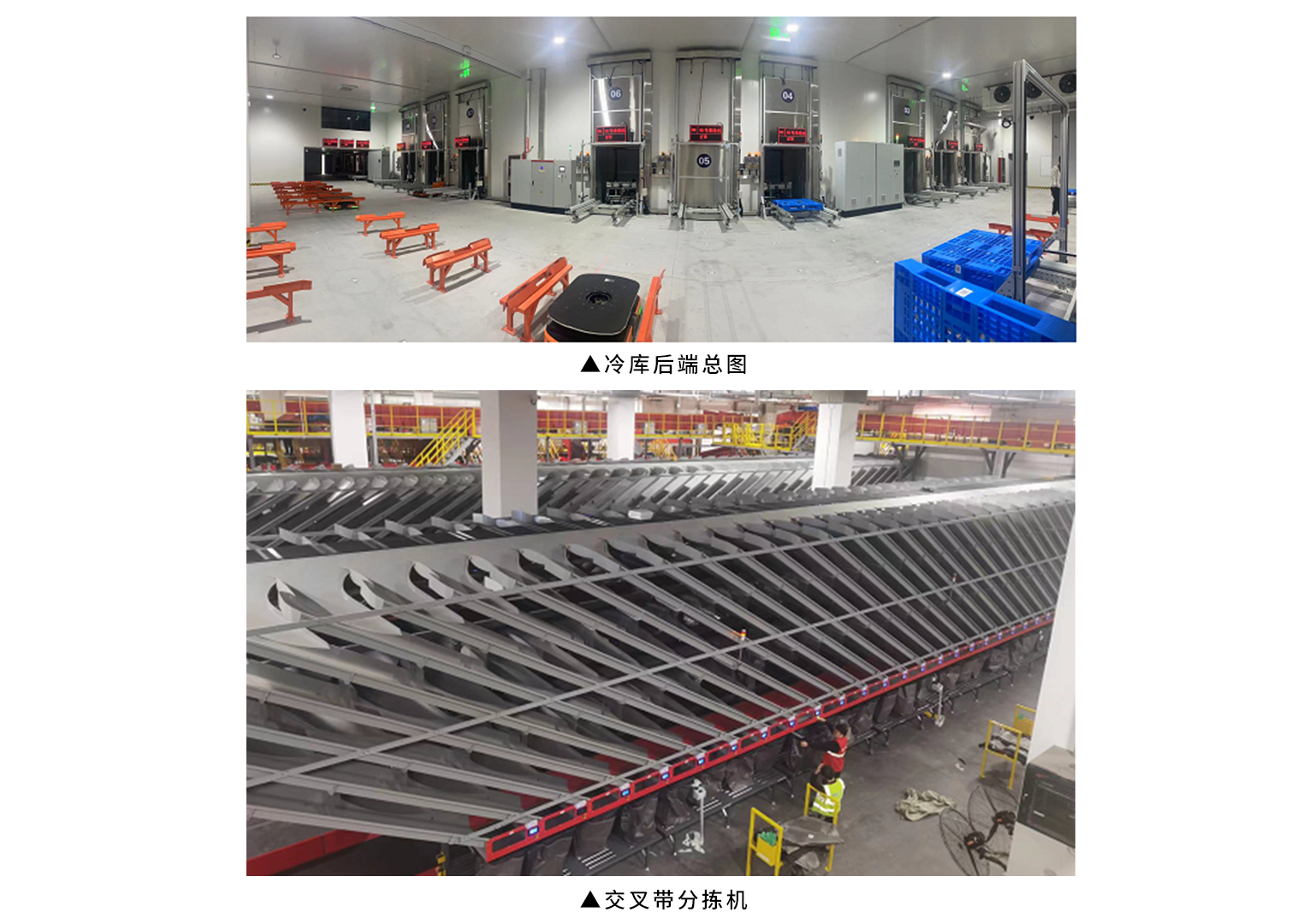
Application of Realtime Technology remote I/O in the logistics warehousing industry
Large sorting centers include telescopic belt conveyors, belt conveyors, singulators, six-side scanners, swivel wheel sorters, cross-belt sorters, induction stations, narrow-belt sorters, and more; intelligent warehousing equipment includes telescopic belt conveyors, belt conveyors, lane stacker cranes, AGV systems, and more. The "brain" of this equipment mainly uses Siemens 1500 PLCs, with 1200 PLCs used for standalone units, while the remaining remote I/O uses Realtime Technology's remote I/O. In actual operation, sorting centers have a large number of conveyors, and each belt requires a variable-frequency drive for speed regulation, with signals from each belt needing to be collected. However, since the distance from the equipment to the main distribution cabinet is often considerable, Realtime Technology's PROFINET communication remote I/O is used here for control, solving all of the above issues at once.
In addition, the workstation signals in the three-dimensional warehouse are also numerous and far from the main cabinet. On site, Realtime Technology's PN-protocol Integrated Modules PN4-1616B were used instead to solve this. Integrated modules are mainly intended for standalone equipment or workstations with fewer points, while Slice structures are used for collecting large numbers of concentrated I/O points, with the models being Coupler XB6-PN2002ST, 32-channel Inputs XB6-3200B, and 32-channel Outputs XB6-0032BW.
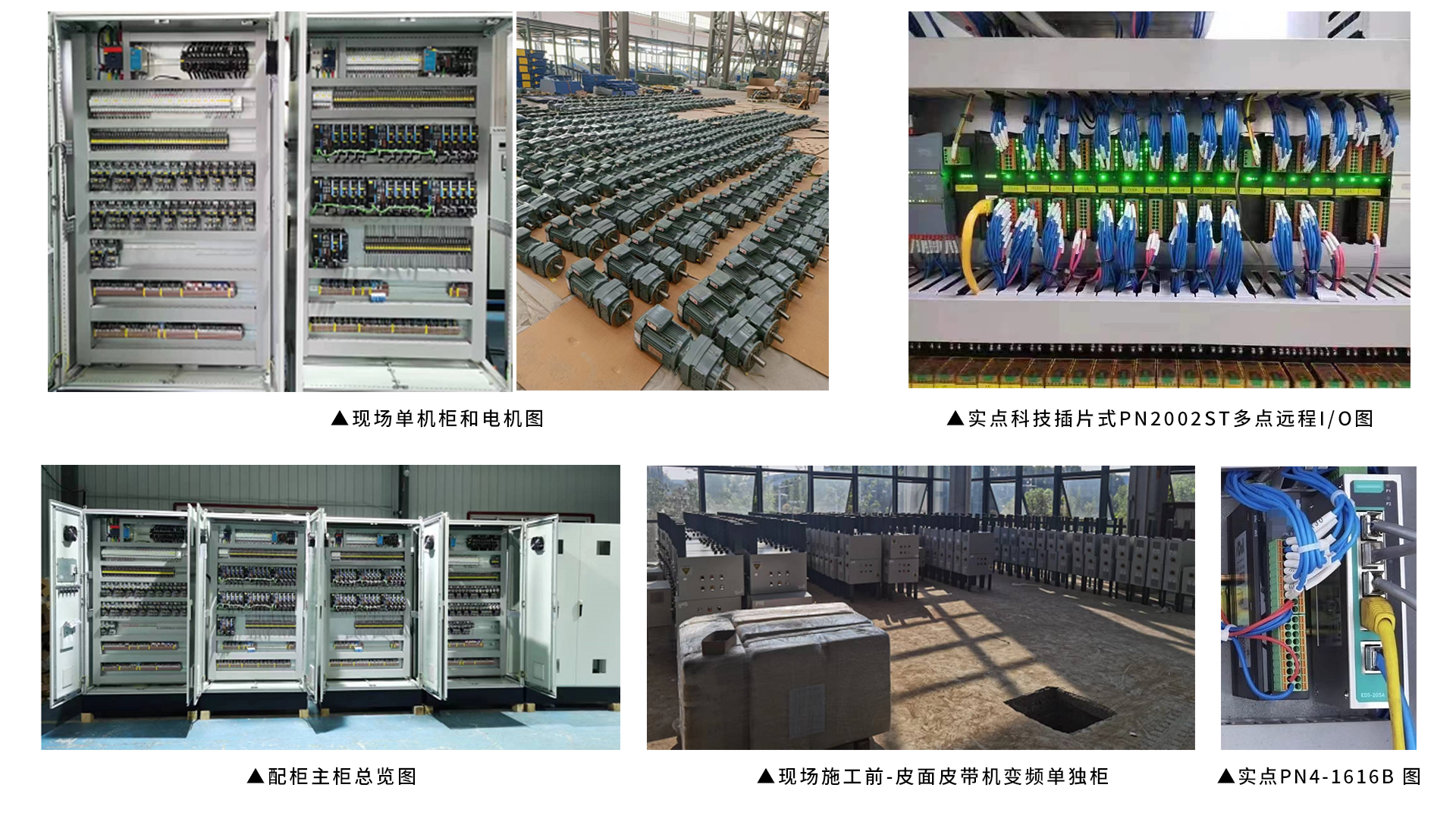
Configuration method for Realtime Technology remote I/O in TIA Portal V16 software
We used a Siemens CPU 1516 PLC, and needed to add the GSD file for Realtime Technology's remote modules in the Siemens TIA Portal software.
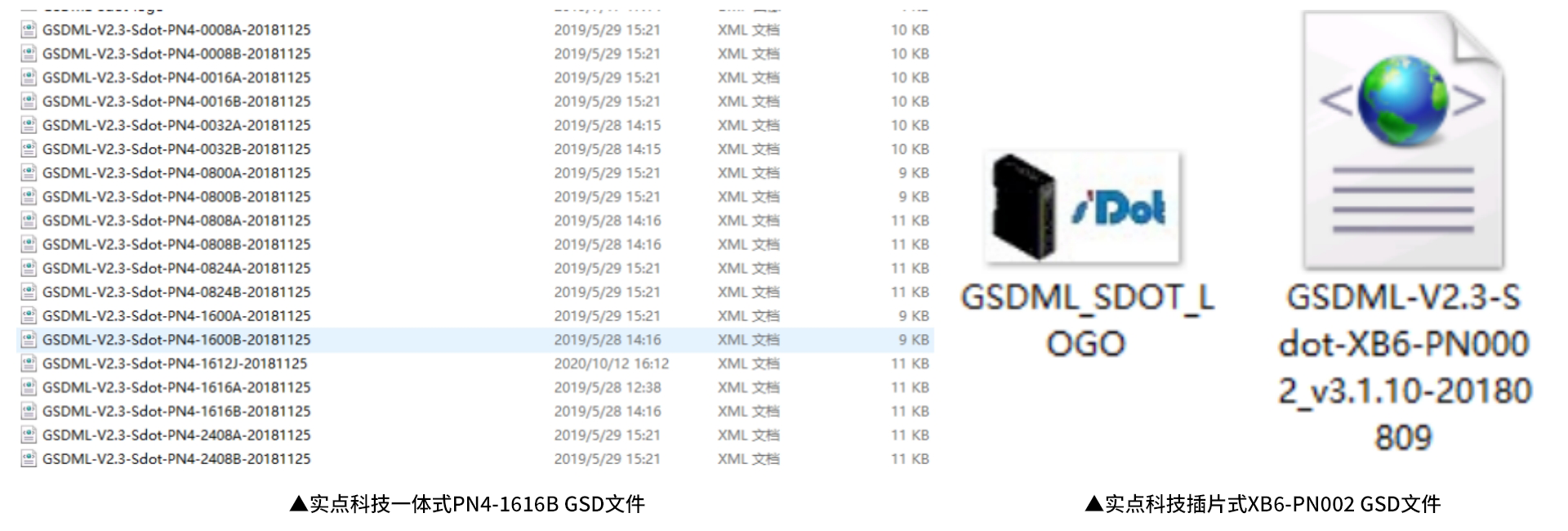
Add the GSD file for Realtime Technology's remote I/O in the TIA Portal software under [Options], as shown below:
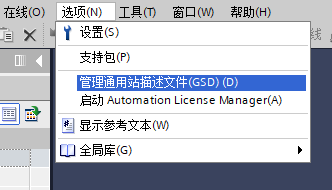
▲ Adding a GSD file in TIA Portal
Finally, perform configuration in the TIA Portal software, configuring accordingly based on the actual number of peripheral I/O points, especially for Slice I/O, as shown below:

Introduction to Realtime Technology's PROFINET Protocol product series
As a well-known automation service provider in China, Realtime Technology entered the domestic discrete I/O sector early, with deep expertise and solid R&D capabilities.
In this case, the on-site equipment is large and the lineup is long. By using Realtime Technology's bus I/O, only a 24 V power supply cable and a single network cable are needed, meeting multiple customer requirements such as simple wiring, easy installation, and convenient maintenance. Among these, Realtime Technology's Integrated I/O Module PN4-1616B is designed for small equipment and scenarios with fewer points, while the Slice XB6-PN2002ST module allows free combination of inputs and outputs with a large number of configurable points. Both are stable in quality and flexible and convenient to adapt, addressing customer pain points while perfectly replacing overseas brands and achieving a win-win in both efficiency and cost-effectiveness.
Recommended Products

PN4-1616B
PROFINET, Integrated I/O, 16DI, 16DO, PNP, 0.5A

XB6-3200B
32 DI, PNP, European style terminal

XB6-PN2002ST
PROFINET Coupler kit (with power supply, end cover )