Knowledge

The photovoltaic industry is a new energy sector encouraged by the state and also forms part of the strategic emerging industries that the state places key emphasis on supporting. The state has introduced a number of supportive policies for the photovoltaic industry, encouraging its development while establishing and improving industry standards, thereby creating a favorable policy environment for the growth of the photovoltaic industry.
The wet process is the starting point of the solar cell production sequence; raw cell wafers obtained from upstream manufacturers or raw material factories begin their new journey here. As the beginning of the cell's production life cycle, wet processes such as texturing are also among the most difficult steps to control in the entire production process. The main function of the texturing machine is to remove the mechanically damaged layer, increase the surface area of the cell, reduce its surface reflectivity, and clean off surface oil and impurities. This case study focuses on the application of Shidian Technology's XB6 Series EtherCAT Protocol Slice I/O in photovoltaic texturing loading and unloading equipment.
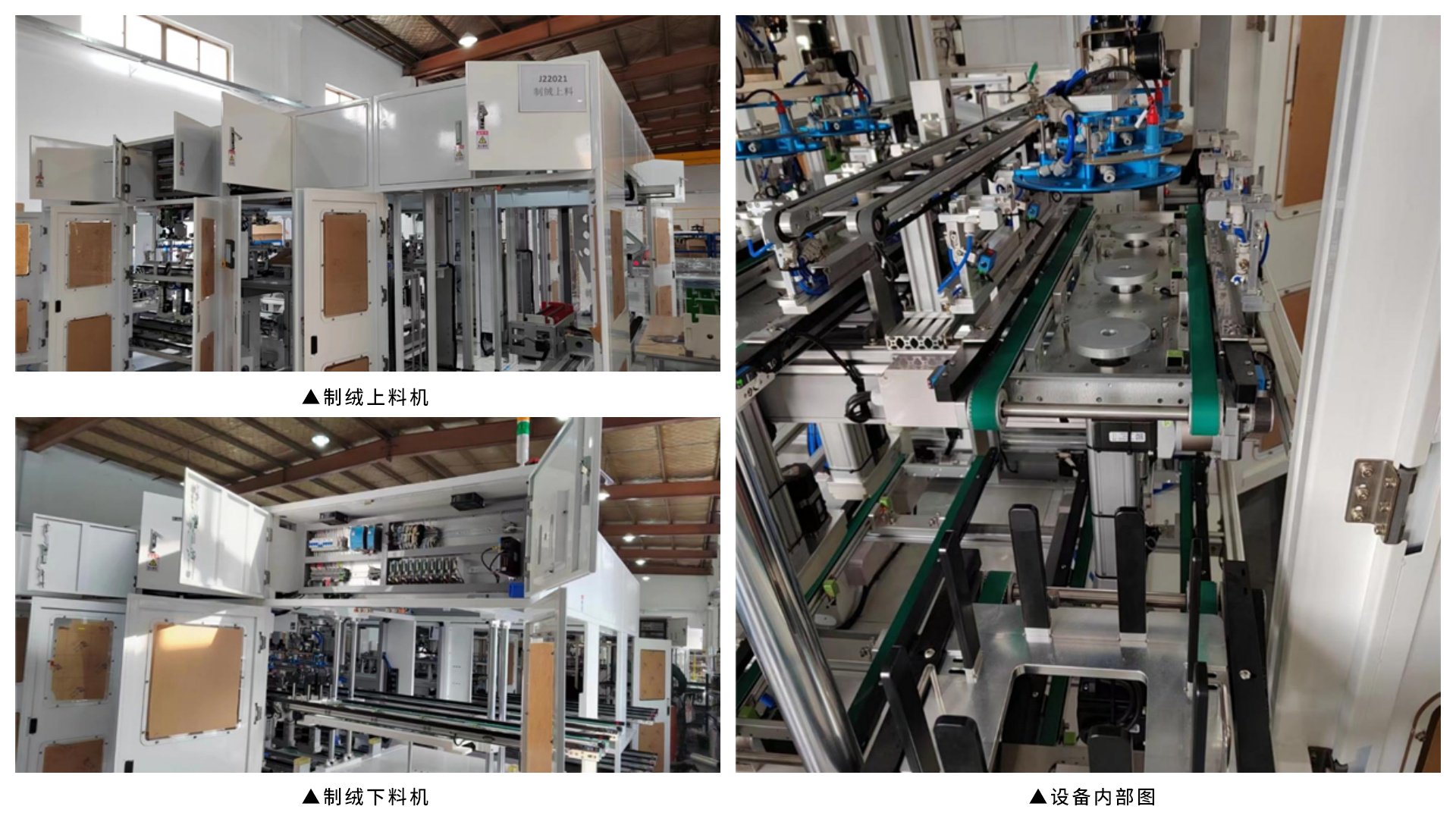
Process description of photovoltaic texturing loading and unloading equipment
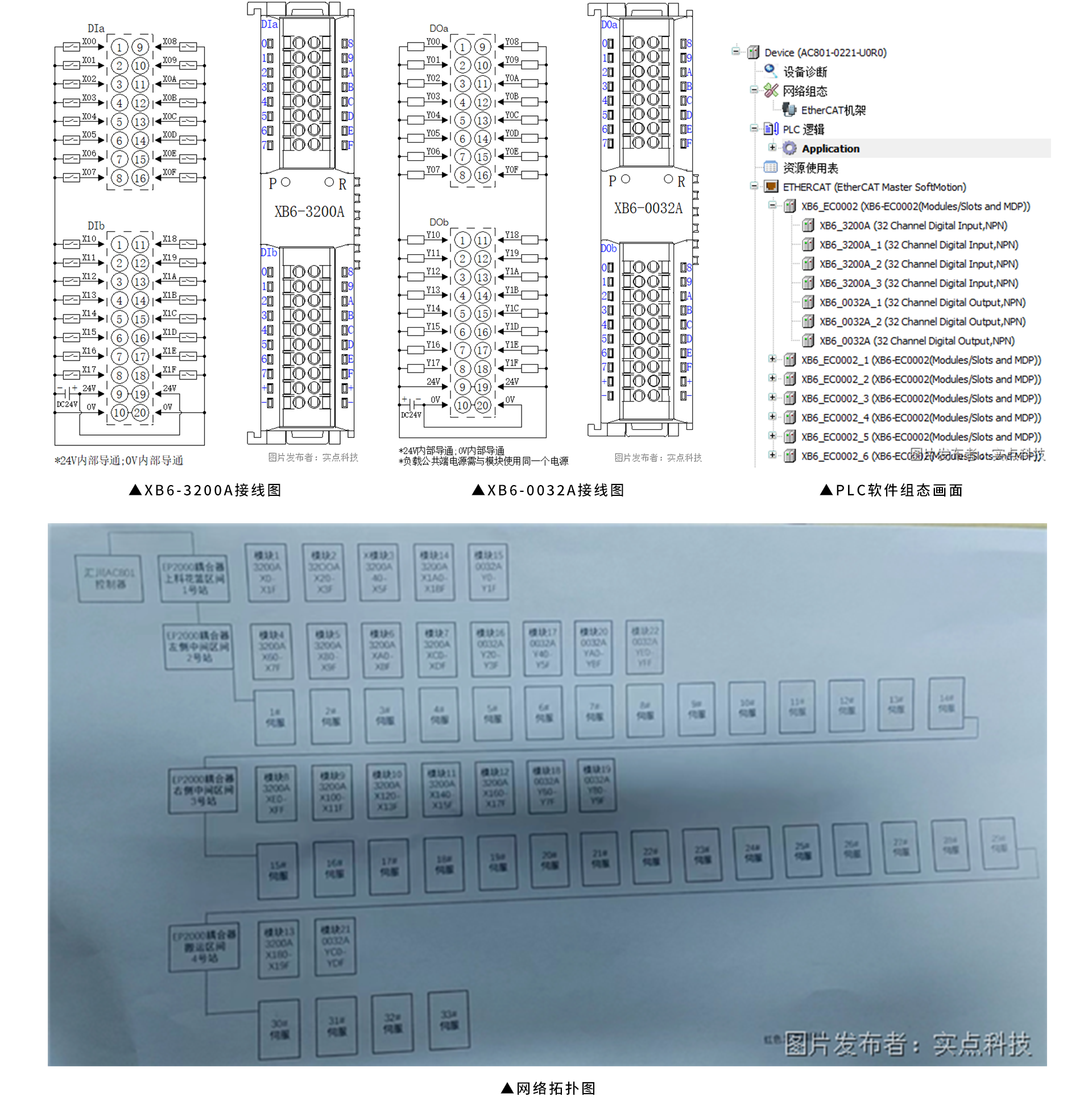
Operators manually load raw materials into designated positions in the loading area, after which an AGV automatically picks up the materials and transports them to the texturing feeder. The feeder conveys the materials to the texturing machine for specialised processing such as removal of the mechanical damage layer. Once processing is complete, the materials are unloaded via the texturing unloader, and the AGV transports them to the corresponding location. The main structure of the loading/unloading machine consists of conveyor belts, suction cups, baskets and other mechanisms, with a large number of signals from cylinders, photoelectric switches, proximity switches and so on. Given the large number of signals and their scattered installation locations, XB6 Series Slice I/O modules were adopted to address this challenge. During device operation, all sensor detection signals are collected by the XB6-3200A module, while signals from actuators such as cylinders are controlled by the XB6-0032A module, and a Servo Motor drives the conveyor belt to feed materials. The texturing feeder uses 5 sets of XB6-EC Series modules, and the texturing unloader uses 1 set of XB6-EC modules.
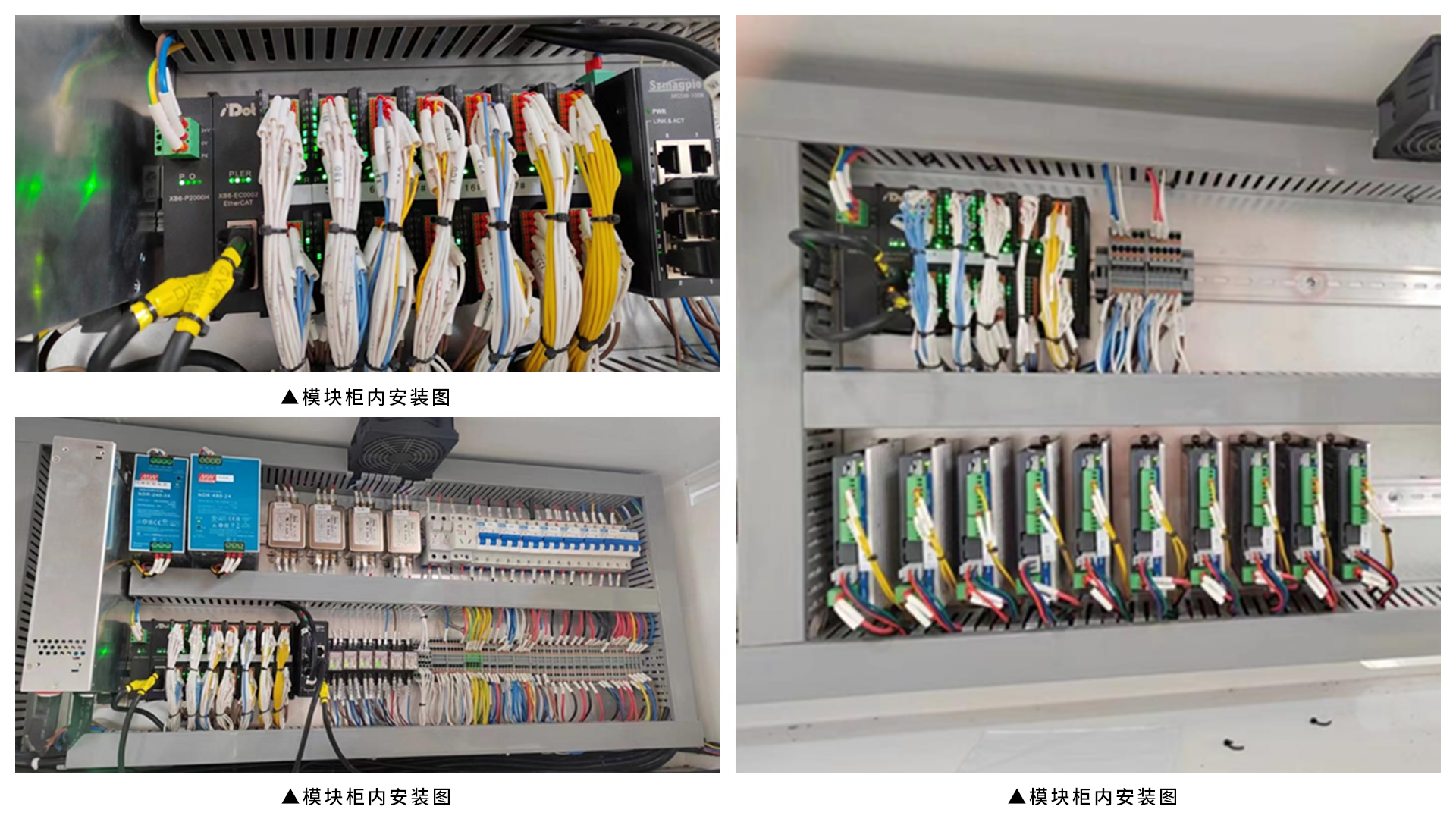
Realpoint Remote I/O PLC Program Configuration Diagram
Module wiring diagram
Realpoint Technology Remote I/O Product Introduction
In the photovoltaic texturing loading/unloading machine application described above, a large number of signals need to be collected, including photoelectric detection signals from the conveyor belt, position signals from the cylinders, and detection signals from the suction cups. The large number of signals combined with their scattered installation locations became a pain point. Using Realpoint Technology's XB6 Series Slice remote I/O not only solved the above problems but also, thanks to its unique design, brought the following advantages to the on-site solution:
*Compact size, saving space inside the control cabinet
*Simple configuration, saving project design time
*Easy installation and wiring, reducing assembly time
*Flexible combination of module models, providing customers with flexible application solutions
*Expandable up to 32 I/O modules, suitable for various application scenarios
Independently developed, professional and specialised. Realpoint Technology's remote I/O modules deliver more reliable performance and a richer product line, providing excellent solutions for customers across all industries.