Knowledge

The cemented shoe process is one of the most important steps in shoemaking, also known as the cold cementing process. It uses adhesives to join the upper, insole and outsole together.
Because the bonding surfaces of the upper and the sole are made of different materials, the type and properties of the adhesive used also differ. The cementing process offers the advantages of a simple process, a short production cycle, high production efficiency, low manufacturing cost and easy expansion of production, so it is the most widely used assembly process in the footwear industry, accounting for more than 80 % of total footwear output.
Introduction to shoemaking-related equipment
[1] Motion control card: Omron CK3E
[2] Servo: Inovance
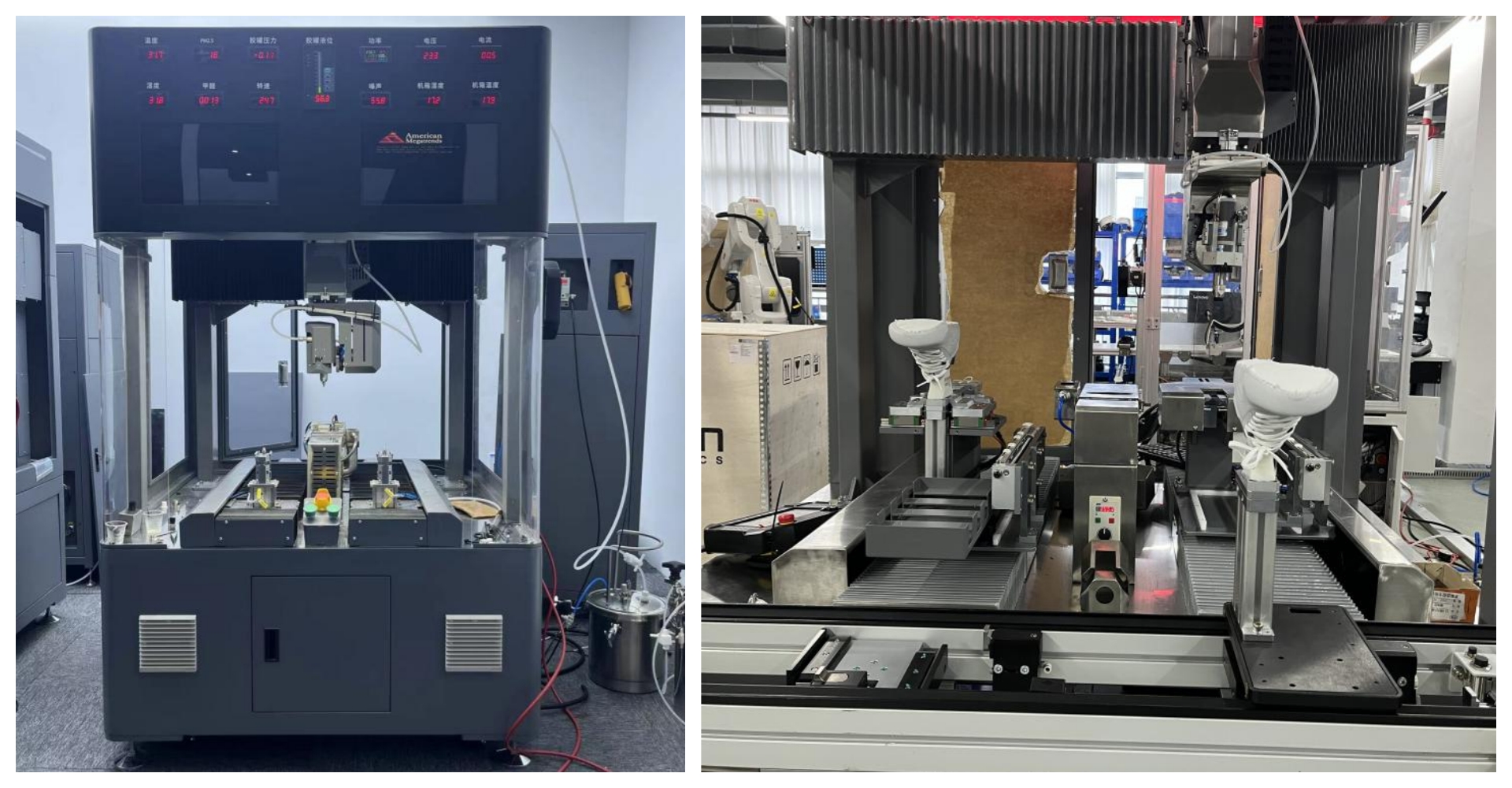
[3] Sole treatment agent spraying and adhesive spraying equipment
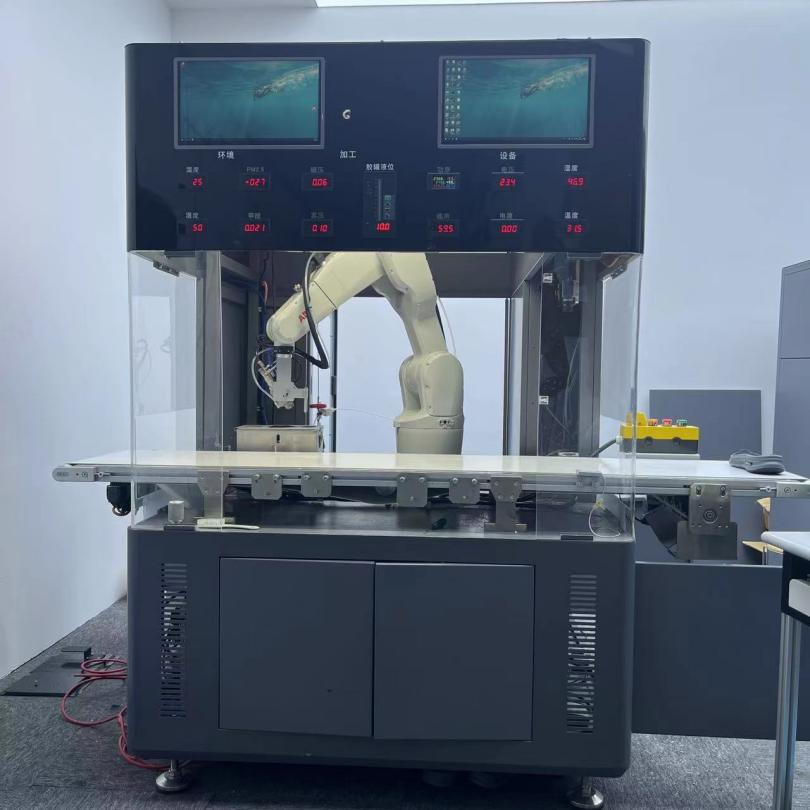
[4] upper treatment agent application and adhesive application equipment
[5] Automated production line
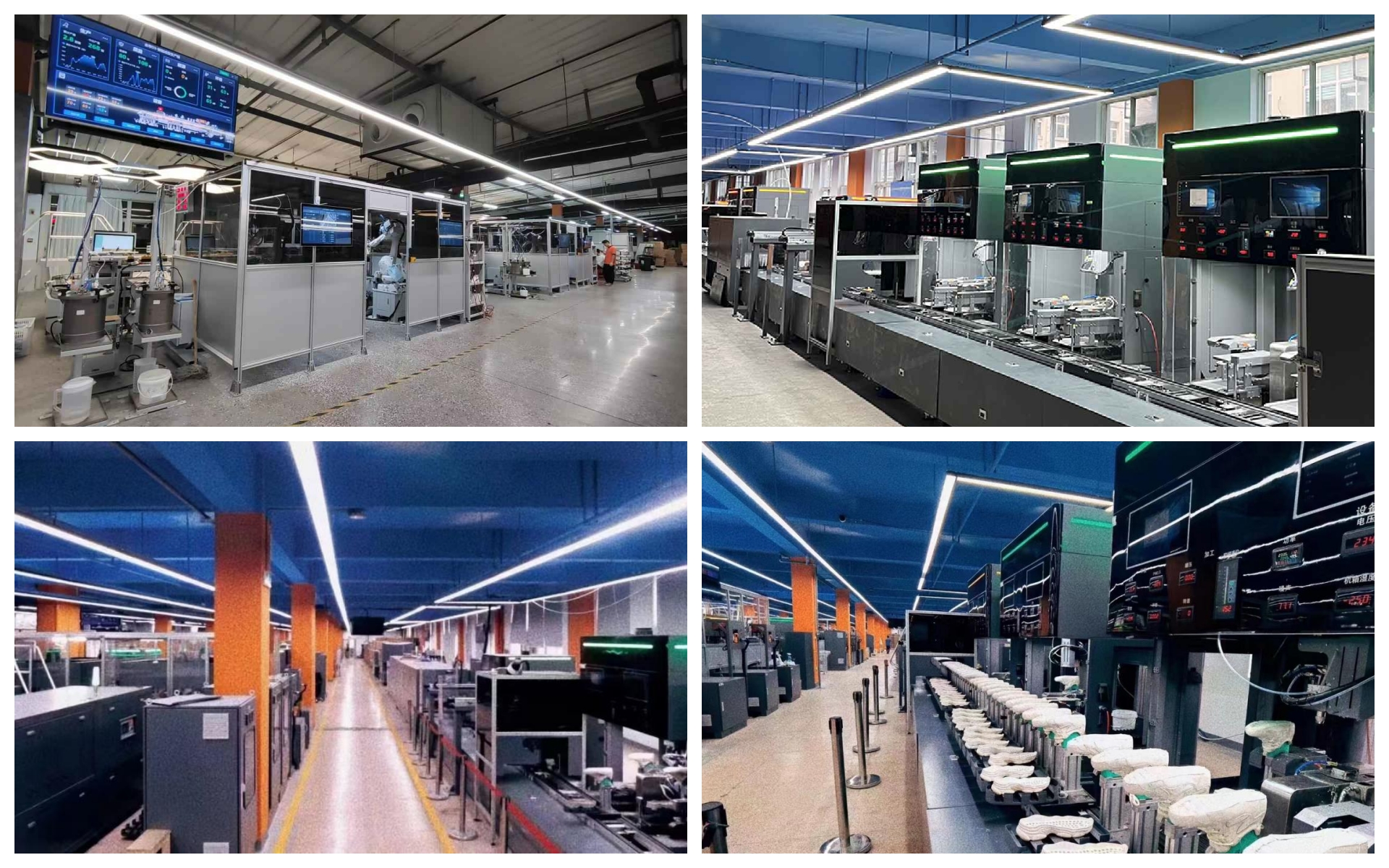
description of the treatment agent spraying and adhesive spraying process in shoe manufacturing
[1] upper roughing workstation: The raw material is loaded into the designated position in the loading area, the upper is ground clean and dust-extracted on the conveyor belt, and then picked up by a robot and transferred to the upper treatment agent spraying workstation.
[2] upper treatment agent spraying workstation: The upper is sprayed with treatment agent, conveyed on the conveyor belt to the baking oven for baking, and then picked up by a robot and transferred to the upper adhesive spraying workstation.
[3] Sole treatment agent spraying workstation: On the conveyor belt, 3D vision processing is used to calculate the spraying path, after which the sole treatment agent is sprayed; the sole is then picked up by a robot and transferred to the sole adhesive spraying workstation.
[4] upper adhesive spraying workstation: Adhesive is sprayed on the upper, which is then picked up by a robot and transferred to the pressing and heat treatment workstation.
[5] Sole adhesive spraying workstation: Adhesive is sprayed on the sole, which is then picked up by a robot and transferred to the pressing and heat treatment workstation.
[6] Pressing and heat treatment workstation: 3D vision is used to identify soles and uppers with irregular adhesive application, after which hot pressing is performed.
Application of Solidot remote I/O in shoe manufacturing equipment
The sole and upper treatment agent spraying and adhesive spraying workstations use an Omron CK3E motion control card, Inovance 630 servo drives, and Solidot XB6 Series Slice I/O modules for control and communication.
During equipment operation, all sensor detection signals are acquired by the XB6-1616A module, actuator signals such as those for cylinders are controlled by the XB6-0008A module, analog signals are acquired by the XB6-A40I module, and Servo Motors control the conveyor belt to feed material.
The shoe upper and shoe package treatment agent application and adhesive application equipment uses one group of XB6-EC series modules.
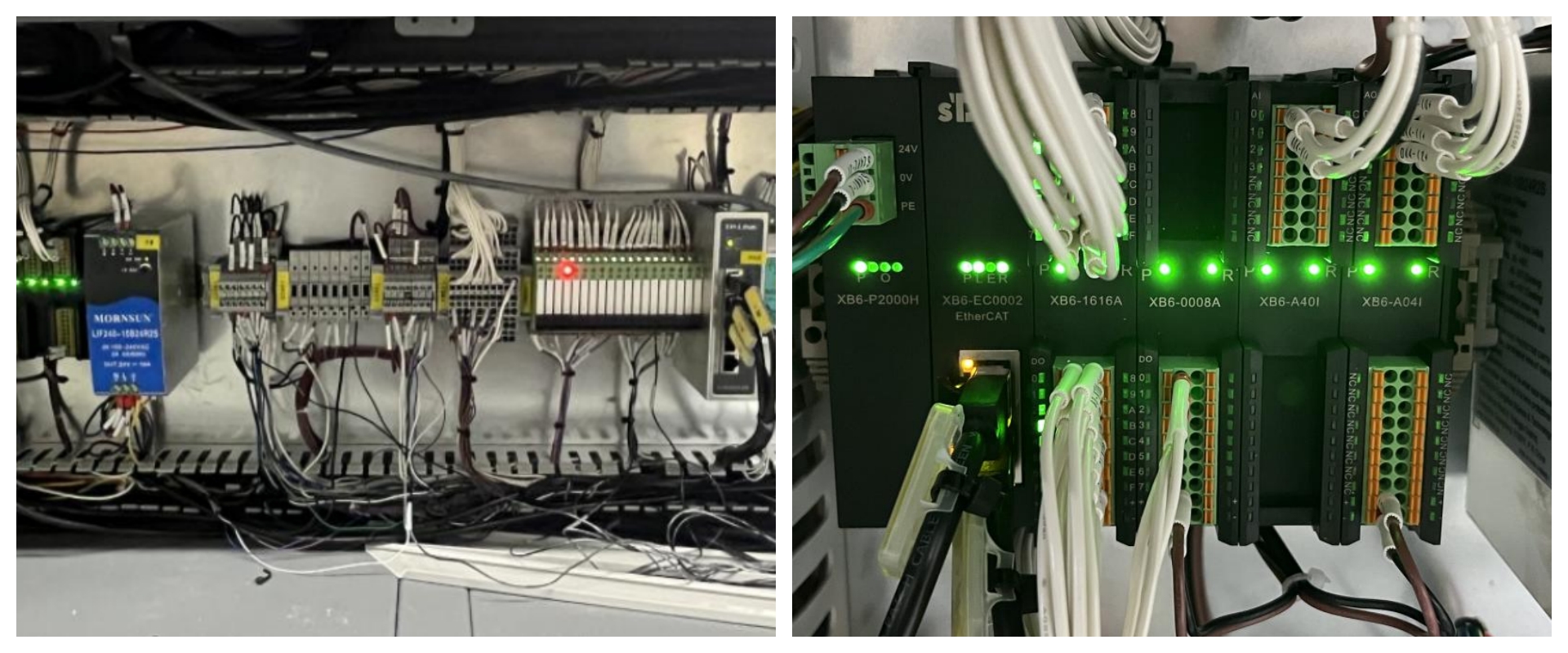
configuration of Solidot remote I/O in a standard shoe manufacturing production line
The production line consists of a large number of stand-alone workstations connected by conveyor belts and robots, with a large number of cylinder, photoelectric switch, proximity switch and other signals, characterized by requirements such as a high signal count, dispersed installation locations and a high IP Protection rating.
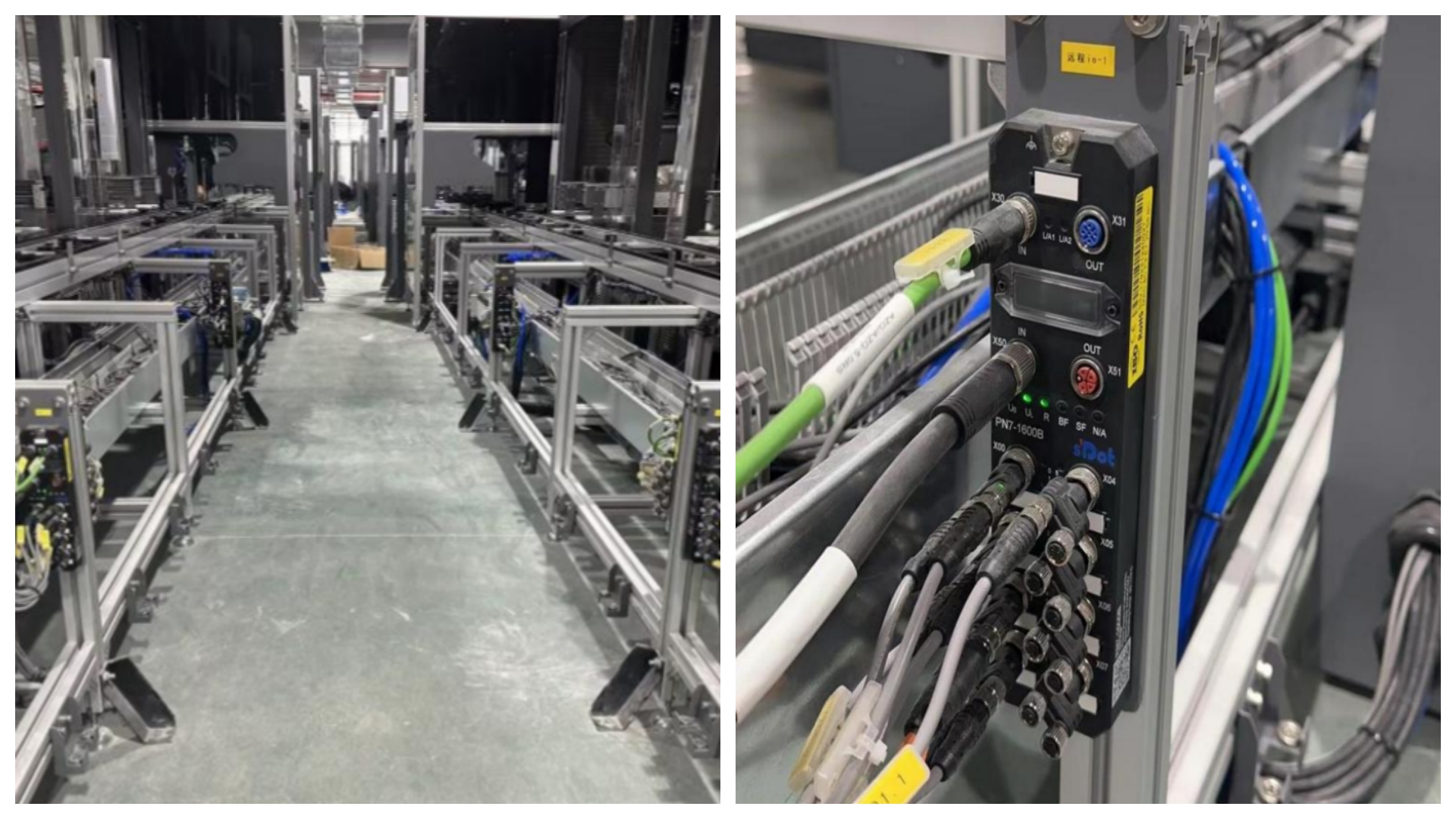
The production line is controlled by a Siemens 1500 PLC as the main controller, and Solidot's IP67 fieldbus I/O series products — the PN7 series integrated I/O modules — are used to handle this.
Sensor detection signals of B are acquired by the PN7-1600B module, and actuator signals such as those for cylinders are controlled by the PN7-0808B module.
The secondary electrical cabinet uses the PN4-1616B to implement data Exchange between the production line and the workstations.