Knowledge

Vacuum coating (PVD/PECVD/magnetron sputtering) equipment is key process equipment for downstream products such as optical components, consumer electronics structural parts, decorative hardware and hard-coated cutting tools. It must complete thin-film deposition under high vacuum and places high demands on precise switching of process gases, reliable isolation of the vacuum chamber and synchronized response of the motion cycle. Valve terminals are becoming the mainstream choice for pneumatic control in such equipment. This case study uses vacuum coating equipment to demonstrate the application of Solidot C3 series valve terminals.
Solidot products used in this case study
C3 series valve terminal
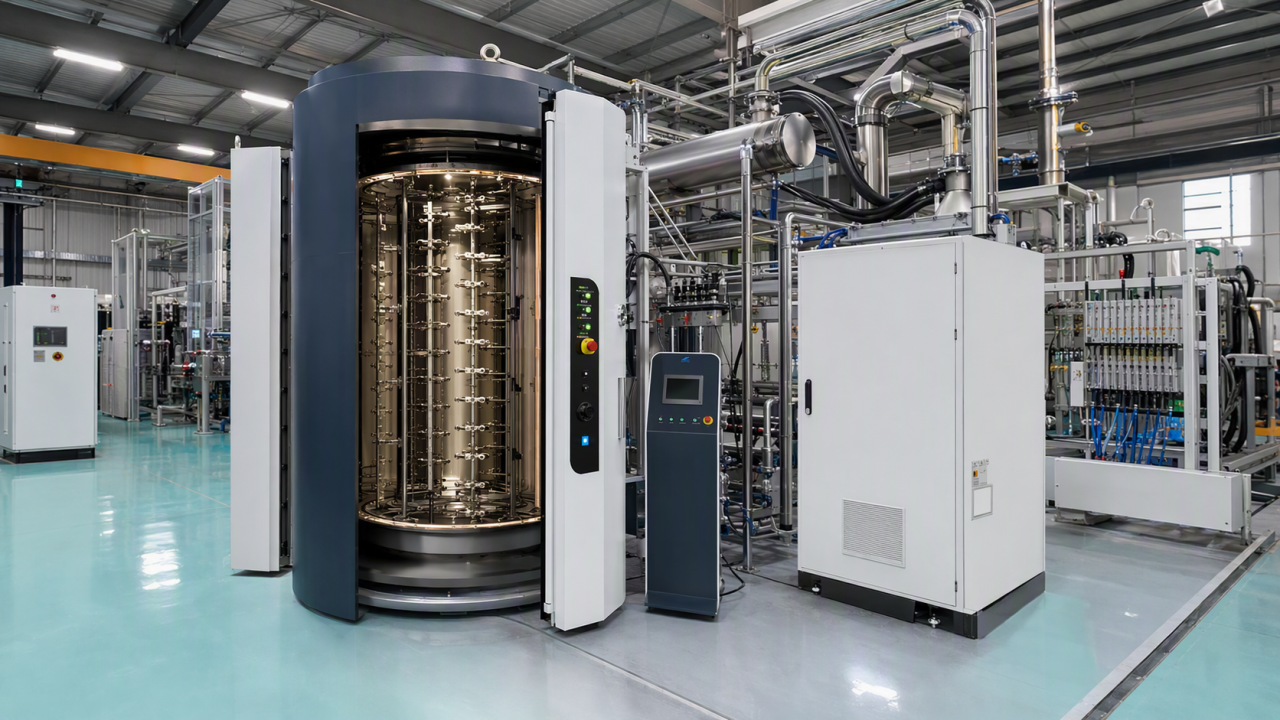
Equipment introduction
Vacuum coating equipment deposits functional thin films such as metal films and dielectric films under vacuum, covering various process routes including magnetron sputtering, evaporation, ion plating and PECVD. A large number of pneumatic actuators are integrated inside the equipment and can be grouped into three categories by function:
Pneumatic actuator classification | Typical controlled objects |
Vacuum chamber control | Pneumatically controlled valves such as vacuum gate valves, vent valves and roughing valves |
Process gas control | On/off and switching valves in various process gas lines |
Auxiliary motion control | Cylinders for loading/unloading, workpiece clamping and door control |
These pneumatic actuators are all driven by solenoid valves — the more air-operated valves and cylinders there are, the more solenoid valve points are required; a single machine often needs dozens of solenoid valves.
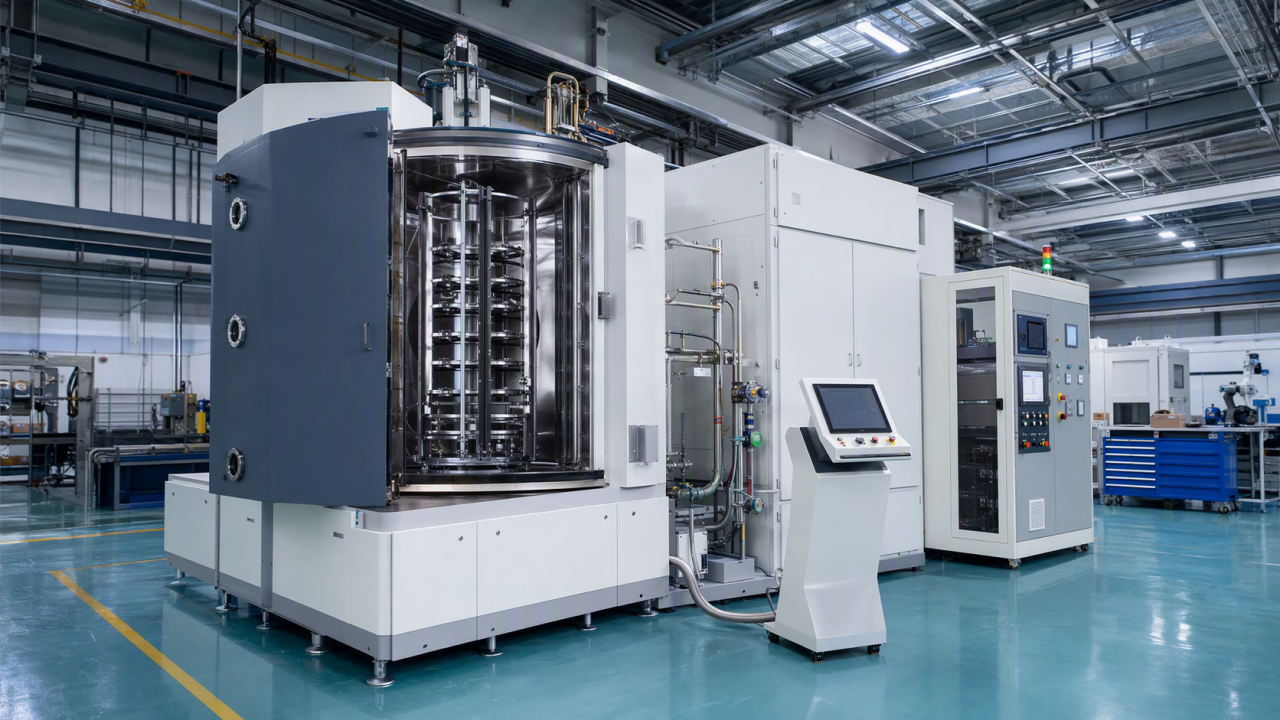
Solidot solution
The vacuum coating process places high demands on the precision of gas on/off control, the reliability of chamber isolation and the coordinated response of multiple gas paths. The number of actuators is large and they are concentrated in distribution, so process gas control and vacuum chamber control need to be managed in a unified way. The solution uses 2 sets of Solidot C3 series valve terminals (PROFINET protocol), deployed in the process gas area and the vacuum chamber area respectively, bringing the two types of pneumatic actuators under centralized control. The valve terminals are mounted on the machine body, and the signals are connected to the PLC via the PROFINET bus.
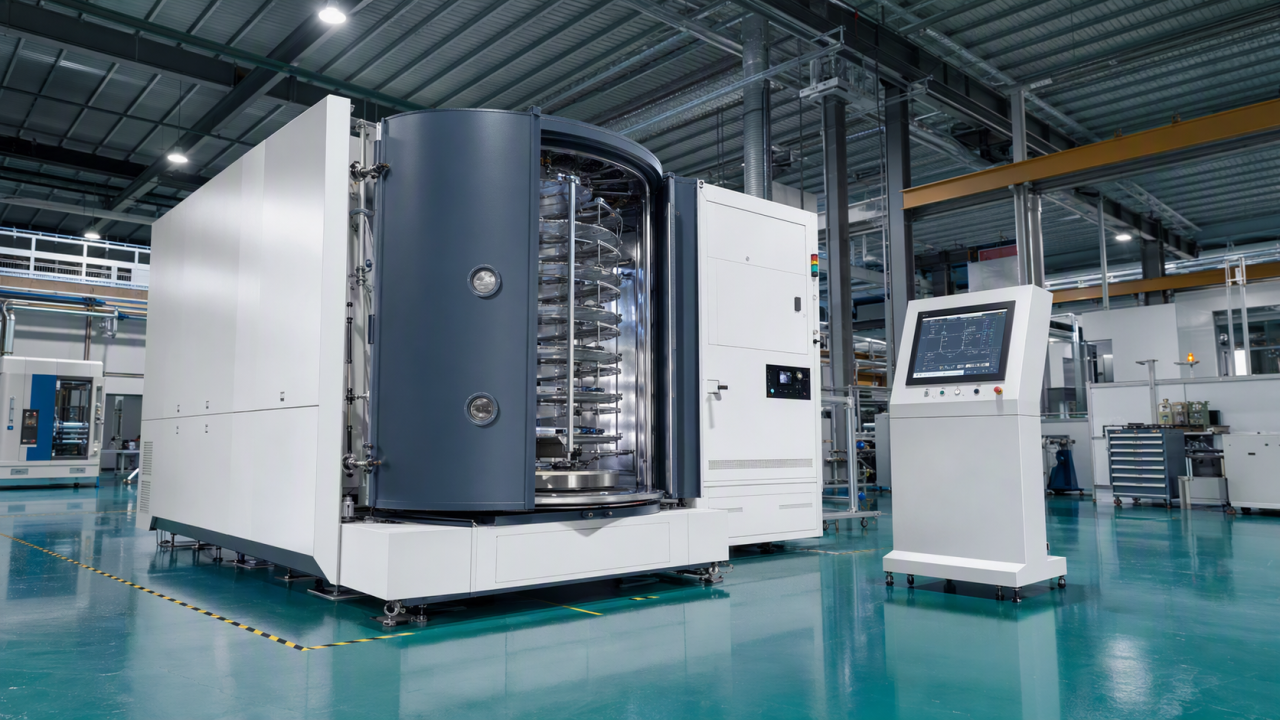
Solution architecture
Control layer:
The Siemens S7-1500 PLC serves as the core controller and manages the 2 valve terminals in a unified way via the PROFINET bus.
Network layer:
The 2 C3 valve terminals are installed in the process gas area and the vacuum chamber area respectively, each connected to the PLC via PROFINET. Single-bus management keeps the network structure clear.
Field layer:
Each valve terminal independently drives the pneumatic actuators in the corresponding area, with valve slices mapped one-to-one to control objects, as follows:
Valve Slice | Controlled object |
Y1 ... Y3 | Process gas lines: solenoid valves in Ar, N₂ and O₂ main lines |
Y4 | Process gas: switching valves upstream and downstream of the MFC |
Y5 ... Y6 | Process gas: CDA main line + purge |
Y7 ... Y8 | Vacuum chamber: high-vacuum gate valve/backing valve |
Y9 ... Y10 | Vacuum chamber: roughing valve/vent valve |
Y11 ... Y12 | Auxiliary air circuit: workpiece clamping/loading door cylinder |
The valve terminal's air nozzle specifications can be flexibly customized (e.g. changed from φ6 to φ8 in this case) to facilitate connection to actuators with different flow rates.
Application results
Dimension | Application performance |
Integrated control | Two valve terminals centrally manage process gas and vacuum chamber air circuits, connected uniformly to the PLC via PROFINET, so air circuit control and actuator feedback are completed within the same network |
Flexible adaptation | Valve terminal air nozzle specifications and valve slice types can be flexibly customized to process requirements, adapting to actuators with different flow rates |
Easy maintenance | Solenoid valves can be replaced easily without reinstalling fittings or rewiring; online firmware upgrade is supported, and spare parts are supplied reliably |
Solidot C3 series valve terminals
The Solidot C3 valve terminal supports configurations of up to 24 Double Solenoid Valves with IP65 Protection rating. It uses the company's own Solenoid Valves, which have a service life of more than 50 million cycles, a low-power design and support online firmware upgrades. Air nozzle specifications and Valve Slice types can be flexibly configured to suit on-site process requirements, and the complete Valve terminal is compatible with mainstream industrial bus protocols such as PROFINET/EtherCAT/EtherNet/IP. It is widely used in vacuum coating, optical coating, hard coating, 3C electronics, lithium battery, semiconductor, new energy and other scenarios requiring high cycle rates and high reliability.