Knowledge

On an automotive rivet assembly and inspection line with multiple robots working in coordination, scattered workstations, complex wiring and high pneumatic response requirements are common control challenges. This article shares a practical application of the Solidot C3 Valve terminal on such a line — by deploying the I/O module and valve terminal close to the workstations, wiring is simplified and the pneumatic response speed is improved.
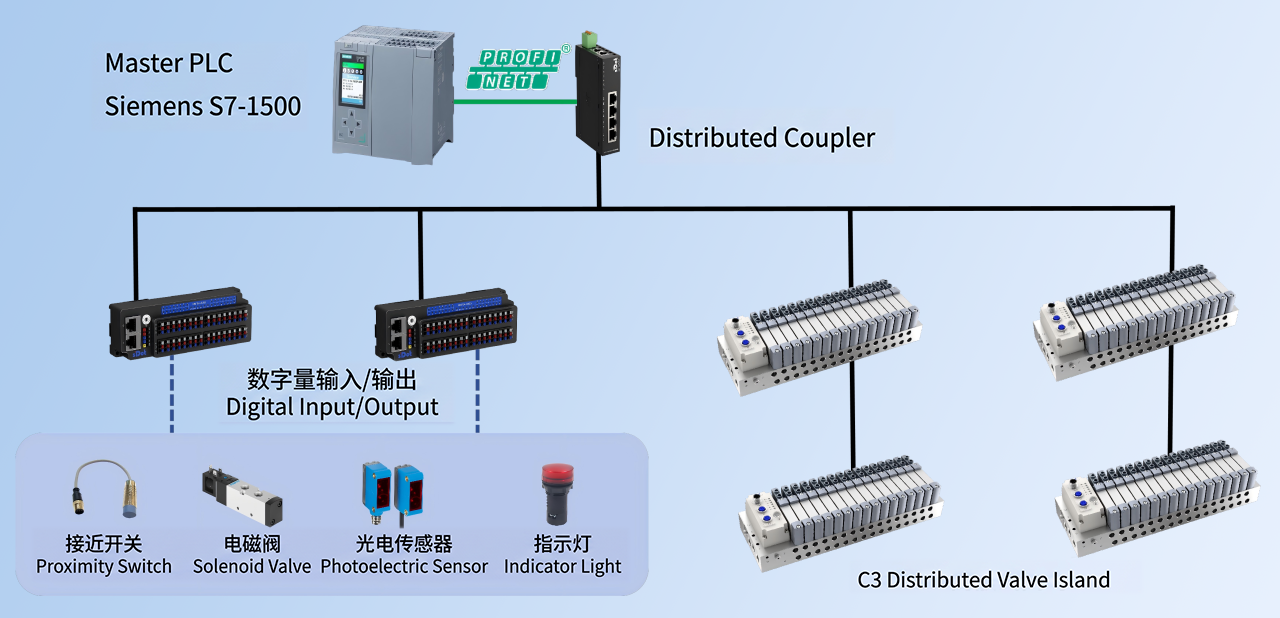
Solidot products used in this case study
(discrete PROFINET coupler)
(digital 16-channel input, NPN/PNP compatible; 16-channel output, PNP)
(digital 32-channel output, PNP)
C3 Valve terminal, configured with Solidot's own solenoid valves
1. Equipment and process
The automotive rivet assembly and inspection line is a key part of automotive component manufacturing, integrating assembly and quality inspection. The entire line consists of an automatic feeding unit, a multi-station turntable, a conveyor system, a pneumatic/servo riveting unit, an inline inspection unit and an automatic sorting mechanism, and can complete the full process from workpiece positioning to quality determination.
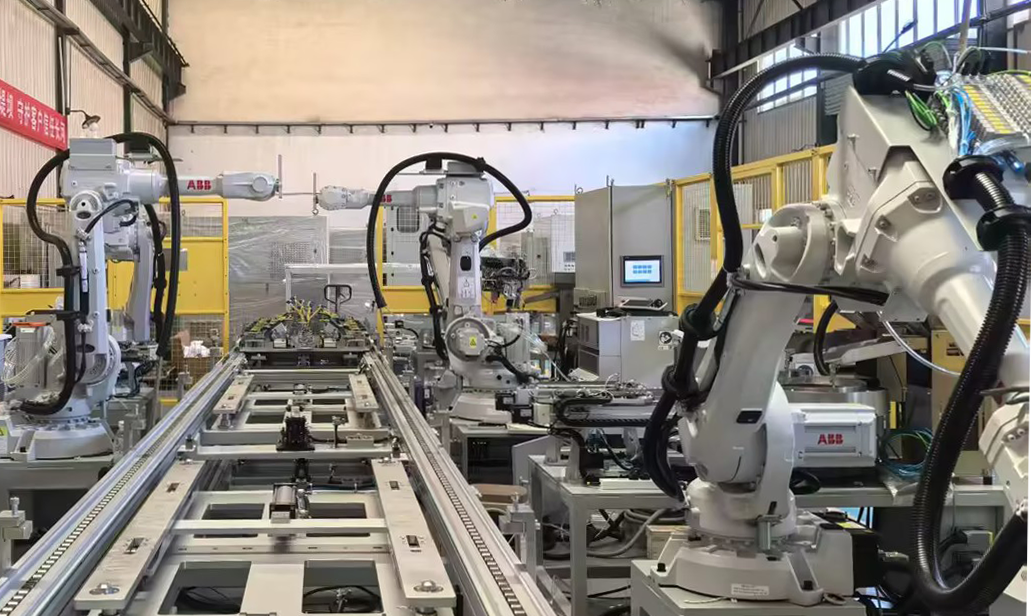
The overall line process mainly covers the following four operations:
Operation | Action description |
① Feeding | Automatically feeds components to the pick-up position via a vibratory bowl feeder and conveyor belt |
② Riveting | Rivets the workpiece with a dedicated riveting tool according to a preset program |
③ Inspection | Online inspection of height, diameter and appearance defects after riveting |
④ Sorting | Automatically divert conforming and non-conforming parts based on the inspection results |
II. I/O communication pain points
The automotive rivet assembly and inspection line uses multiple pieces of equipment working together to perform the riveting, assembly and inspection processes, and is laid out as a line. For automated control, there are three main pain points:
Pain point 1: Scattered stations, complex signal wiring
Industrial robots, sensors and actuators are distributed along the line. Conventional I/O modules require cables to be routed from the main cabinet to the end points, resulting in long, messy cabling and difficult installation and maintenance. Long-distance wiring also weakens the pneumatic response, and hard wiring restricts subsequent expansion of the production line.
Pain point 2: High response requirements for pneumatic actuators
During the production process, the valve terminal must switch direction quickly to ensure synchronous and consistent equipment motion. Signal delays or jitter can cause workpiece position drift or unacceptable riveting quality, affecting product yield.
Pain point 3: Complex on-site environment, high protection rating requirements.
The valve terminal must be installed close to the station, where space is limited, so a protection rating is required for the valve terminal. At the same time, equipment vibration affects the long-term stable communication of the valve terminal.
III. Solidot C3 valve terminal solution
This solution uses the Solidot C3 discrete valve terminal with discrete I/O modules, connected to a Siemens S7-1500 PLC via the PROFINET bus:
Control layer:
The Siemens S7-1500 PLC serves as the core controller, responsible for overall line logic scheduling, data processing and signal exchange with the robot controller.
Information layer:
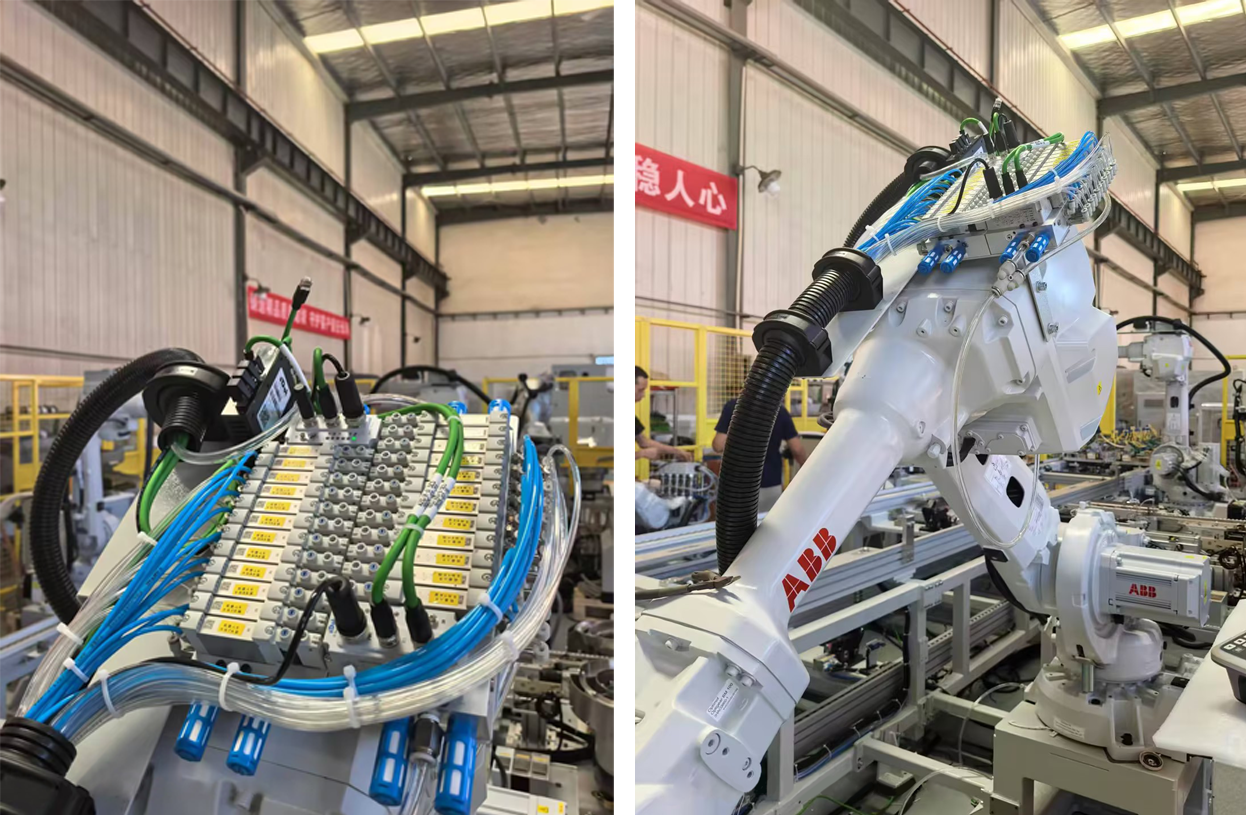
Solidot discrete I/O modules are combined with the C3 valve terminal and installed in a distributed arrangement at each station node, effectively reducing signal cable length and simplifying the overall wiring structure.
Actuator layer:
C3 discrete valve terminals are installed at the station air supply points, receiving control commands via the discrete I/O modules and directly driving pneumatic grippers, riveting cylinders and blow-off cleaning actuators, achieving near-end centralized control of the pneumatic units.
Dimension | Benefits |
Wiring optimization | With a discrete I/O architecture and signal acquisition close to the point of use, the number of cables leaving the main control cabinet is significantly reduced, overall cable length is cut by about 30 %, and installation time is shortened by about 20 % |
Response speed | The valve terminal supports high-speed switching; in practice, the cycle time at the riveting station is improved by about 15 %, meeting the demands of high-cycle production |
Stable communication | The C3 valve terminal offers strong interference immunity and an IP65 protection rating, ensuring consistent parallel operation of multiple stations and closed-loop control accuracy of the riveting force |
Cost reduction | Discrete I/O and the C3 valve terminal are installed close to the point of use, greatly reducing the number of cables and making system maintenance easier |
4. Solidot C3 valve terminal
The Solidot C3 valve terminal supports up to 24 double solenoid valves and has an IP65 protection rating; the in-house branded solenoid valves have a service life of > 50 million cycles, a low-power design, and support online firmware upgrades. It is widely used in demanding applications such as automotive manufacturing, 3C electronics and lithium batteries.