Knowledge


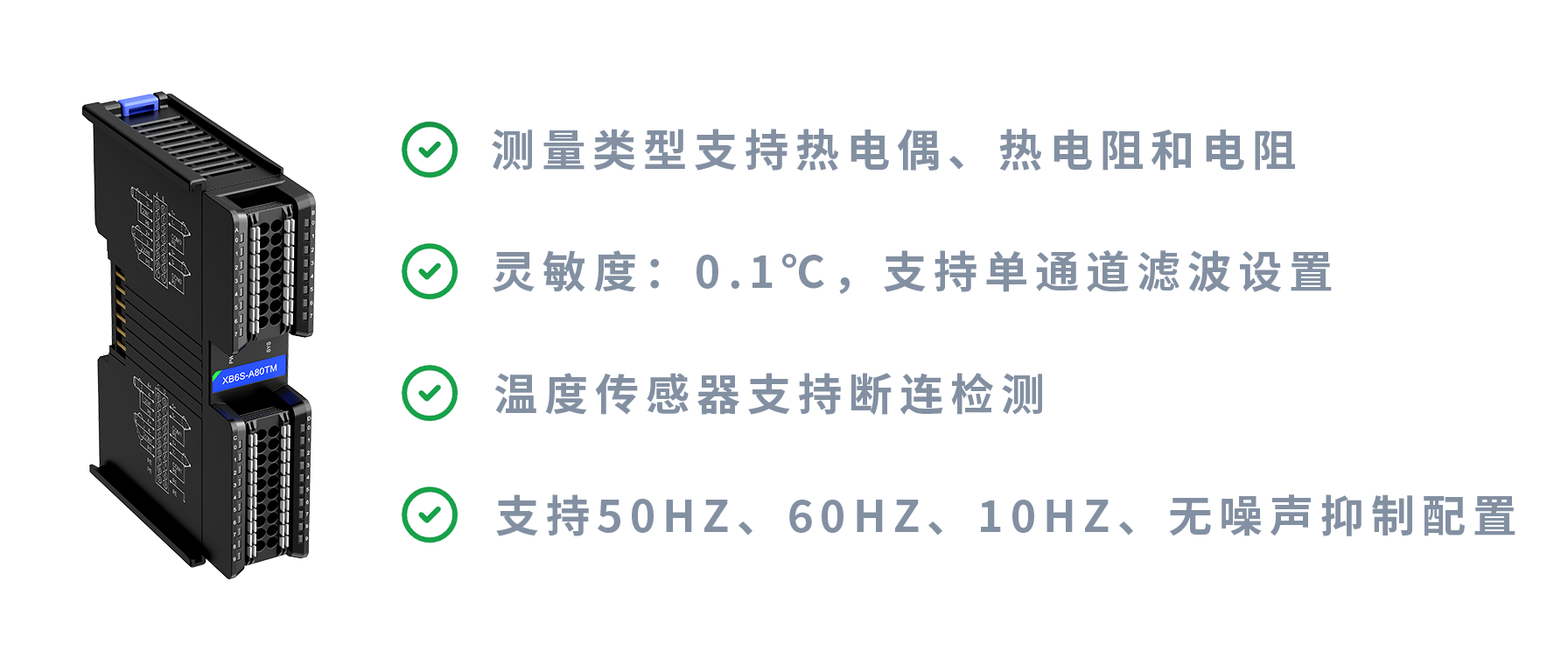
XB6S-A80TM is an 8-channel temperature input module in the XB6S series. It supports sensors such as RTDs and thermocouples and is compatible with XB6S series couplers. The module saves installation space and offers high practicality, providing reliable support for high-speed data acquisition, optimized system configuration, simplified field wiring and improved system reliability.
1. Application example
In industrial production, temperature is a key parameter. Real-time monitoring of temperature changes on the production line ensures product quality and production safety. For this reason, the XB6S-A80TM temperature input module is widely used in industrial environments.
Take a sintering furnace as an example. Such equipment is widely used in ceramics, metallurgy, electronics, glass, chemicals, machinery, refractory materials, new material development and other fields. It sinters powder materials into solid blocks at high temperatures and therefore places high demands on temperature accuracy. With the XB6S-A80TM, temperature sensor data can be acquired precisely, ensuring that the furnace temperature remains constant and meets the requirements of the sintering process.
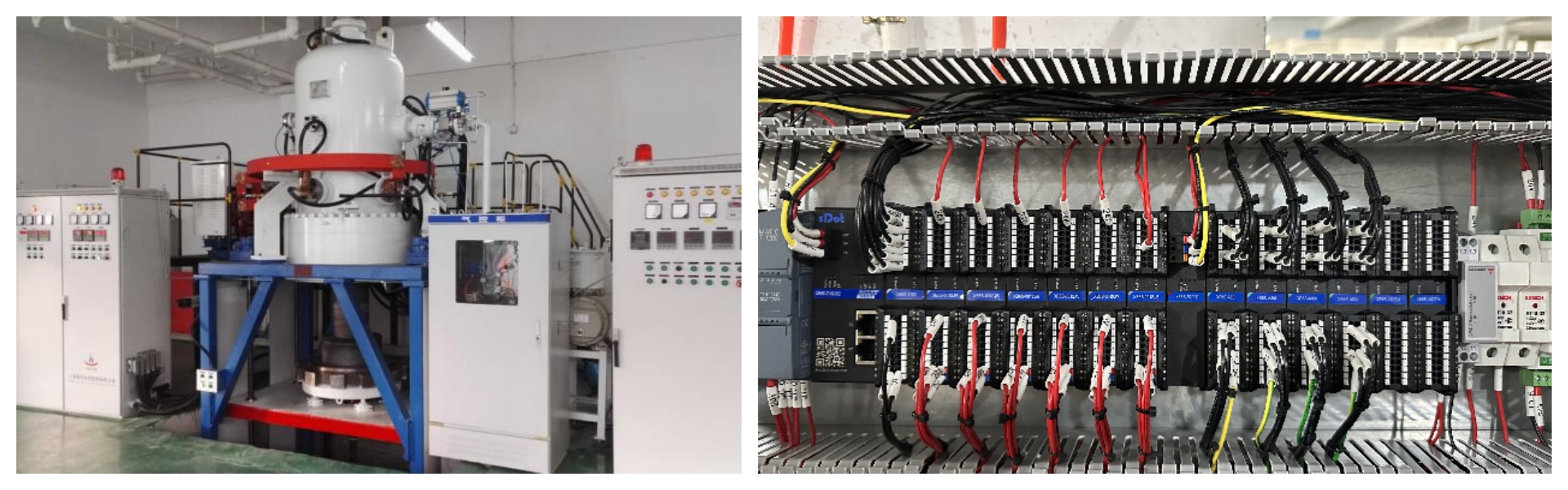
Left: sintering furnace equipment, right: XB6S-A80TMfield application
2. Panel structure and wiring diagram
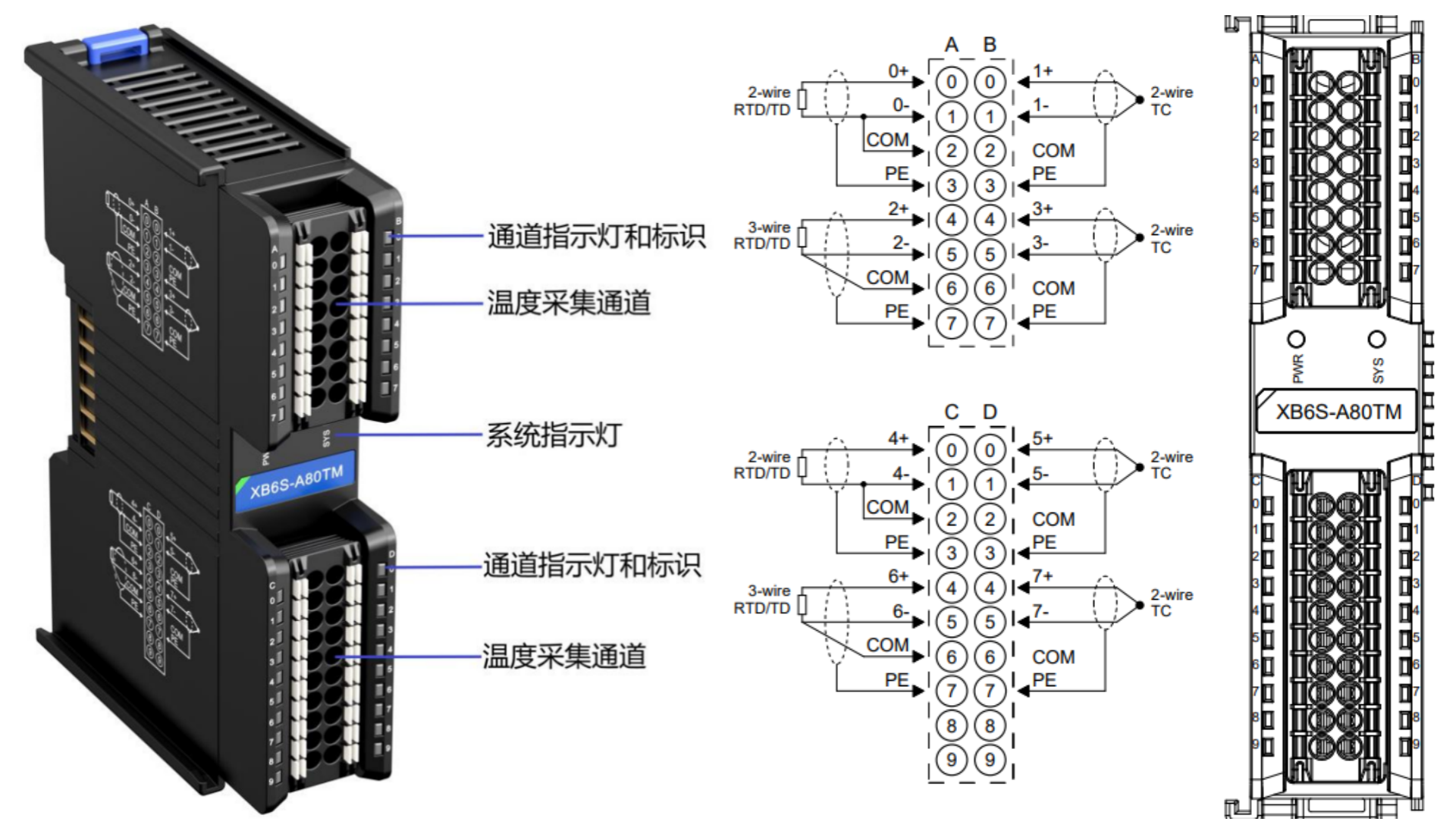
Left: XB6S-A80TMpanel structure, right: XB6S-A80TMwiring diagram
3. Parameter overview
In addition to the XB6S-A80TM, Solidot also offers the 4-channel temperature input module XB6S-A40TM in the XB6S series. The parameters of the relevant products are as follows —
Interface parameters | ||
Product Model | XB6S-A40TM | XB6S-A80TM |
Bus Input Power Rated Voltage | 5 V DC (4.5 ... 5.5 V) | |
Rated current consumption | 110 mA | 110 mA |
power consumption | 0.55 W | 0.55 W |
Transmission rate | 6 Mbps | |
Station Type | slave | |
Power Supply | 5 V DC, powered via the X-bus | |
General parameters | ||
Dimensions | 106.4 x 25.7 x 72.3 mm | |
Weight | 90 g | 110 g |
Operating temperature | -20 ... +60 °C | |
Storage temperature | -40 ... +80 °C | |
Relative Temperature | 95 %, non-condensing | |
Protection rating | IP20 | |
Technical Specifications | |||
Number of channels | 4, 8 | ||
Sensor Type | thermocouple | RTD | resistance |
Connection Method | 2-wire | 2-wire, 3-wire | 2-wire |
Sensor Code and Range | B: 50 ... 1800 °C | Pt100: -200 ... 850 °C | 15 Ω ... 3 kΩ |
Accuracy | ±0.3 % @ 25 °C (F.S.) | ±0.1 % @ 25 °C (F.S.) | ±0.1 % @ 25 °C (F.S.) |
Sensitivity | 0.1 °C | ± 0.10 | |
Temperature Measurement Unit | Supports switching between Celsius, Fahrenheit and thermodynamic temperature scale units (default unit: Celsius) [2] | ||
resolution | 16 bit (int type) | ||
Channel Conversion Time | 29 ms/ch | 73 ms/ch | |
Filtering | Single-channel filtering, configurable (level 0 ... 10) | ||
Disconnection detection | Supported | ||
Disconnection detection time | 2 ms | ||
Miswiring Overvoltage Protection | ±30 V | ||
Noise suppression | 50 Hz, 60 Hz, 10 Hz, no noise suppression | ||
Excitation current | < 2 mA | ||
Input impedance | >= 10 KΩ | ||
Isolation method | Digital Isolation | ||
Isolation withstand voltage | 500 V DC | ||
Channel indicator | Green LED | ||
Note [1]: Sensor codes C, L, N, R, T, U, Ni120, Ni200, Ni500, 15 Ω ... 150 Ω , 15 Ω ... 300 Ω , 15 Ω ... 600 Ω configuration | |||
Note [2]: Fahrenheit ( F) = 32 + T (℃) × 1.8; Thermodynamic Temperature Scale ( K) = T (℃) + 273.15. | |||