Knowledge

In industries such as plastics, chemicals, food and building materials, automated conveying and proportioning of powder and granular materials is a key part of the production process, and demand for building and upgrading intelligent batching systems continues to grow. Intelligent batching systems have many tanks distributed over a wide area and long field signal wiring distances, which places high demands on the deployment flexibility and signal reliability of the control system. Remote I/O modules installed nearby and expanded on demand have therefore become the mainstream choice for automated control of intelligent batching systems. This case study takes an intelligent batching control system as its subject and presents the practical application of Solidot PN5R Series integrated I/O modules.
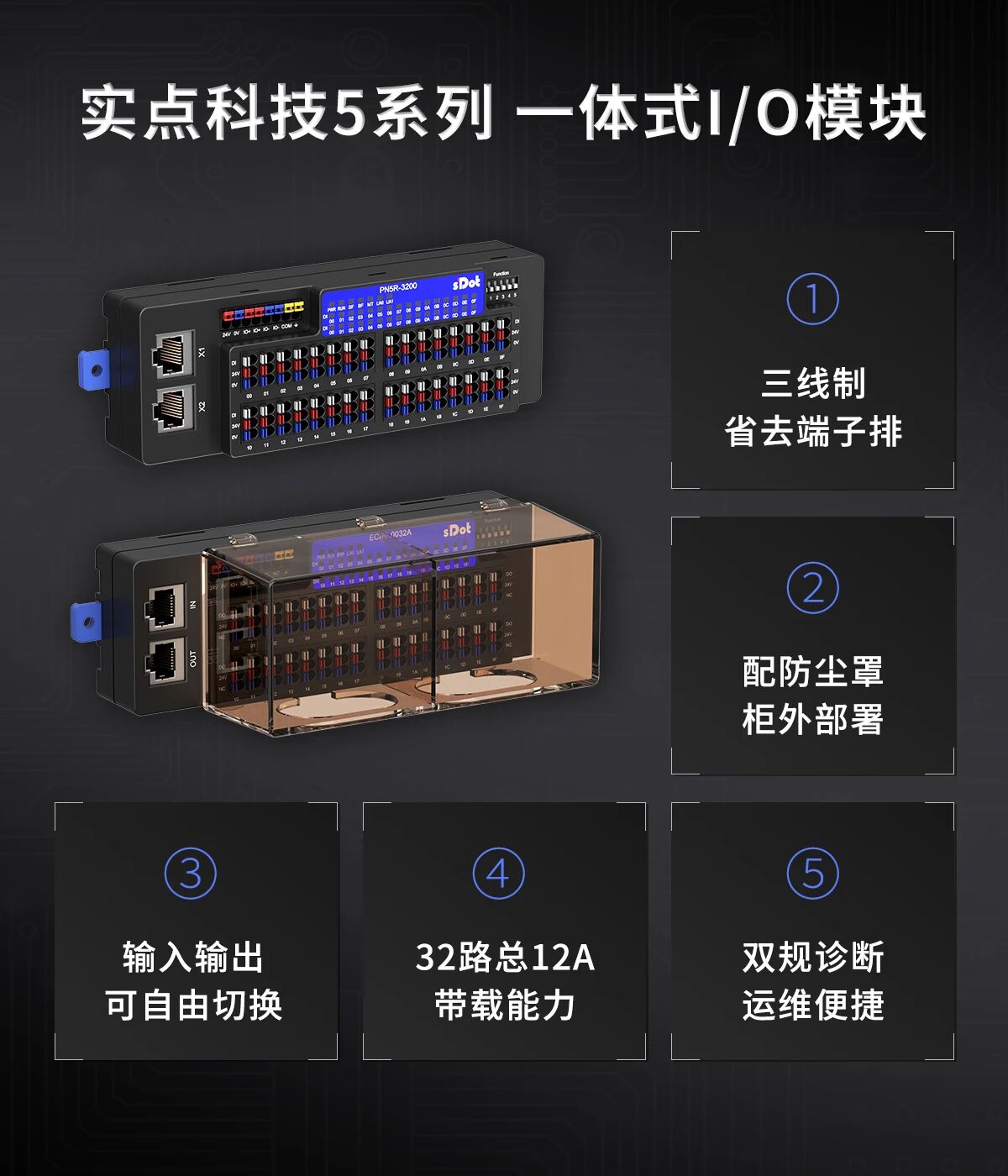
Solidot products used in this case study
Equipment overview
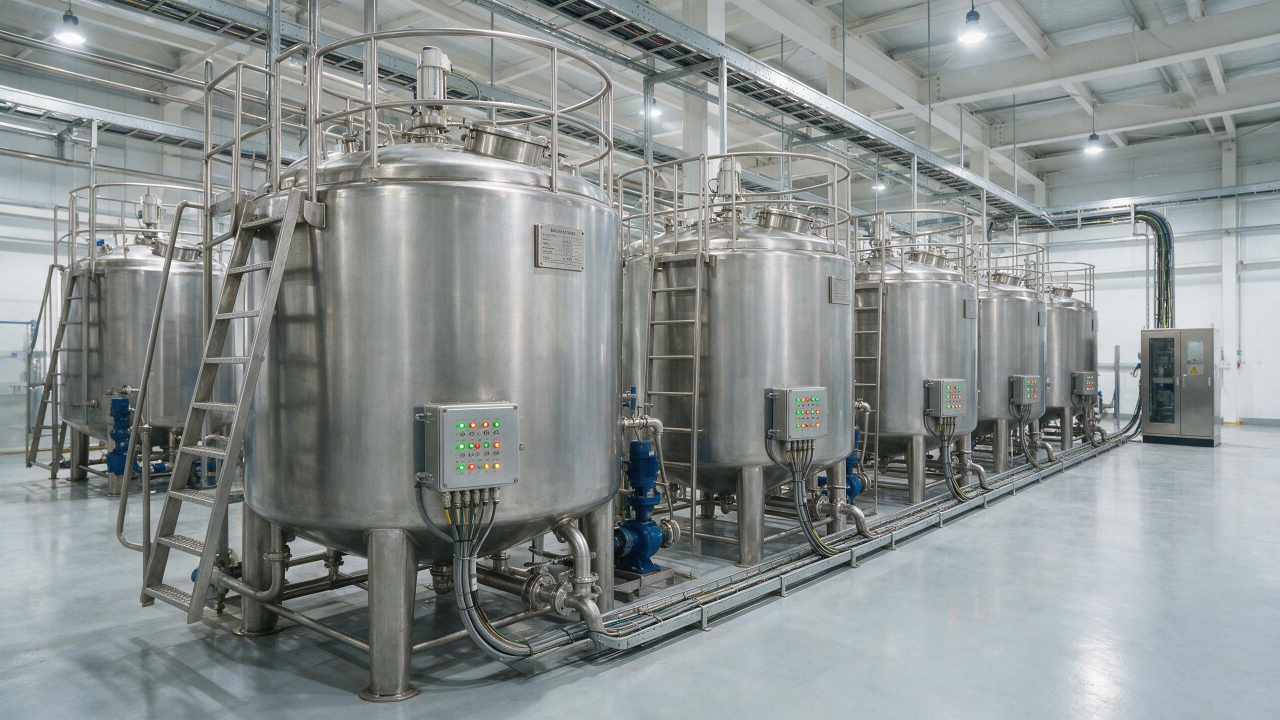
The intelligent batching control system is key equipment in the field of automated conveying and proportioning of powder and granular materials and is widely used in industries such as plastics, chemicals, food and building materials. The complete system generally consists of multiple storage tanks (silos), a pneumatic/positive-pressure conveying unit, a weighing and metering unit, a batching and mixing unit and a host control system. It automatically extracts, conveys, meters and proportions materials according to a preset recipe, enabling continuous, lightly staffed and stable production.
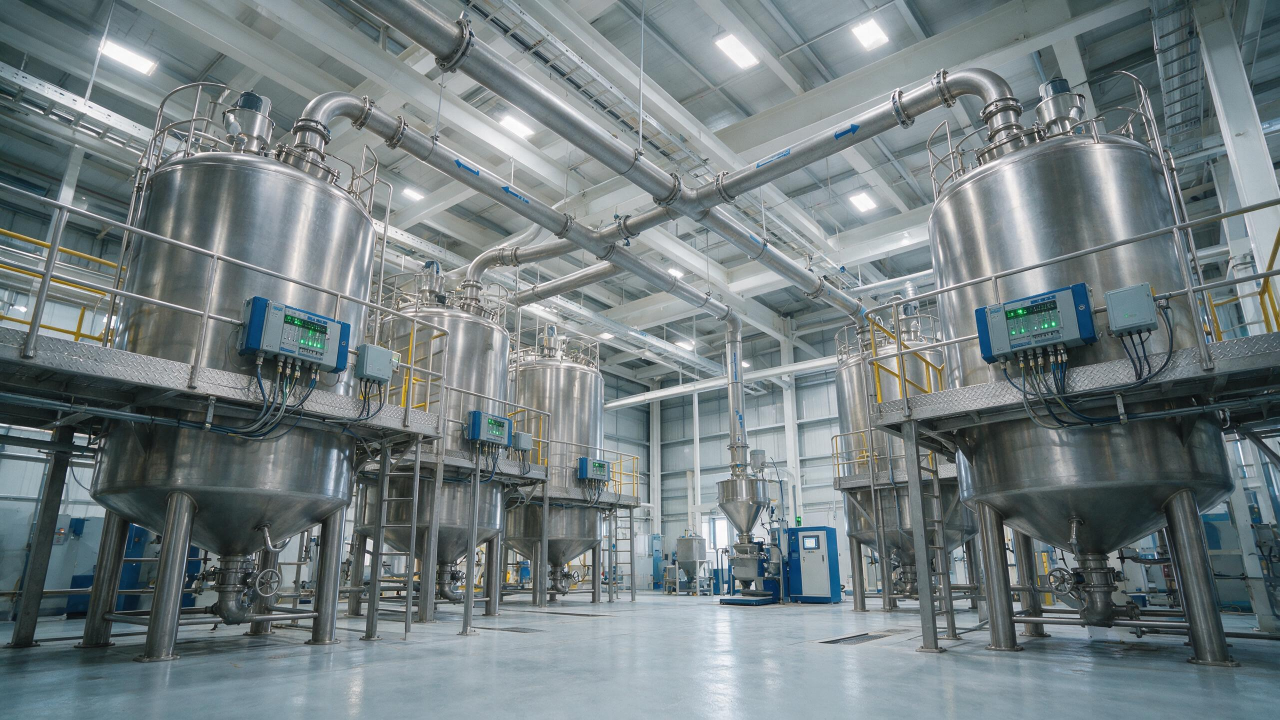
The process flow of the complete system covers the following stages:
Stage | Action description |
① Storage | Each raw material is stored by category in the corresponding tank |
② Conveying | Extracted by the pneumatic/positive-pressure conveying unit and delivered to the metering station |
③ Metering | Quantitative feeding according to the recipe by the weighing and metering unit |
④ Proportioning | Proportional batching completed in the batching and mixing unit |
Solidot solution
This intelligent batching control system uses a Siemens PLC as the core controller, and the tanks are distributed across different areas of the plant. Given the distributed tanks and the large number of field signal points, this project focuses on two automation control requirements and provides a targeted solution using Solidot PN5R Series integrated I/O modules:
Requirement 1: Optimise wiring and save costs
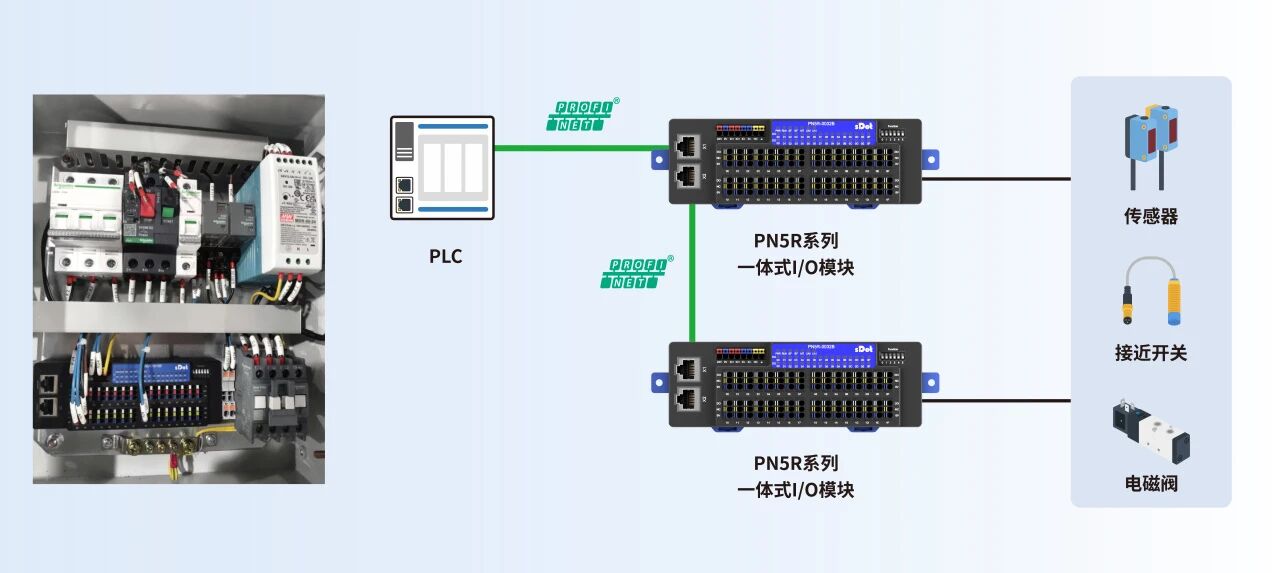
The PN5R series integrated I/O modules from Solidot (PN5R-1616B) are connected to a Siemens PLC via the PROFINET protocol to build a distributed control architecture. Each module is deployed near its corresponding material tank and placed inside the existing waterproof and dustproof junction box of the tank, so that field signals are connected locally and actuators are driven locally.
Requirement 2: Optimize on-site maintenance and production line expansion
The indicator design of the PN5R series integrated I/O modules, positioned directly next to the channels, makes on-site inspection and maintenance clear at a glance; together with diagnostic alarms, Disconnection Detection and module Fault Auto-Recovery, fault localization and troubleshooting become more convenient. For later production line expansion, simply add the corresponding I/O module nodes to the cascading link to complete integration, offering flexible expansion and a controllable lead time.
Solution architecture
Control layer:
The Siemens PLC serves as the core controller, handling recipe management, batching logic scheduling and data processing, and exchanges data in real time with the I/O modules at each material tank via the PROFINET bus.
Network layer:
The PN5R-1616B features 2 x RJ45 communication interfaces and supports a linear topology. The modules distributed across the material tanks are cascaded one after another along the production line and return to the control cabinet via a single bus cable, resulting in a clear network structure that is easy to expand.
Field execution layer:
One PN5R-1616B is installed near each material tank to acquire digital input signals such as level switches, in-position/proximity sensors and valve feedback locally, and to drive pneumatic actuators such as the inlet valve and discharge valve.
[note]
The PN5R-1616B module itself has a Protection rating of IP20. In this solution, the existing waterproof and dustproof junction box of the material tank provides on-site protection for it; if direct deployment outside the cabinet or in the field is required, an optional Dust cover is available to meet on-site protection requirements.
Application results
Dimension | Application performance |
Wiring structure | The PN5R series integrated I/O modules allow signals to be connected locally, and each material tank can be configured as an independent station as needed. Only the bus and power cables remain between the main cabinet and the material tanks, reducing signal cable length and simplifying installation. |
Signal reliability | Field signals are acquired and output locally at the material tank, reducing the risk of electromagnetic interference and signal attenuation, and ensuring stable operation of the batching process. |
System scalability | The bus topology supports flexible expansion. When adding or removing tanks or adjusting the process, simply add the corresponding I/O module node to the cascading link to complete integration quickly, making later upgrades convenient with a controllable schedule. |
Solidot PN5R Series integrated I/O modules
The Solidot PN5R series integrated I/O modules combine communication and I/O functions in a single unit and use a PROFINET Industrial Ethernet bus interface.
The module has a compact horizontal structure and supports two installation methods on standard DIN rail: latch mounting and fixed mounting. An optional dust cover enables installation outside the cabinet. It features short-circuit protection, reverse connection protection, surge protection, disconnection detection, diagnostic alarms, module fault auto-recovery and online firmware upgrades. The innovative channel indicator design makes the channel status clear at a glance, simplifying on-site inspection and maintenance.
It is widely used in scenarios such as intelligent batching, material conveying, packaging and 3C electronics, where high demands are placed on distributed I/O deployment and simplified on-site wiring.