Knowledge


Laser cutting blanking production lines are widely used in sheet metal processing and the manufacturing of metal structural parts. The dust removal stage of such equipment involves on-site actuators such as dampers and solenoid valves, and their deployment method directly affects the on-site air path routing and electrical control layout. This case study takes a laser cutting blanking production line as its object and demonstrates the practical application of the Solidot C3 valve terminal.
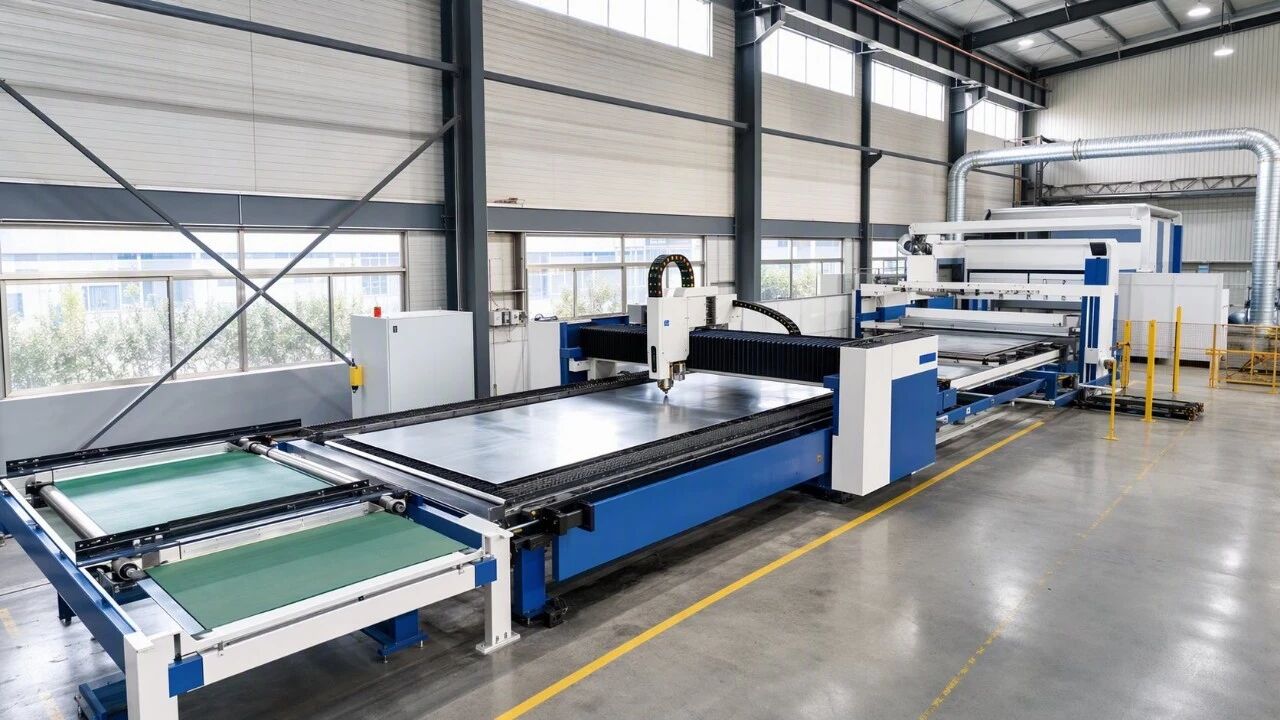
Solidot products used in this case study
C3 series valve terminal
(PROFINET protocol)
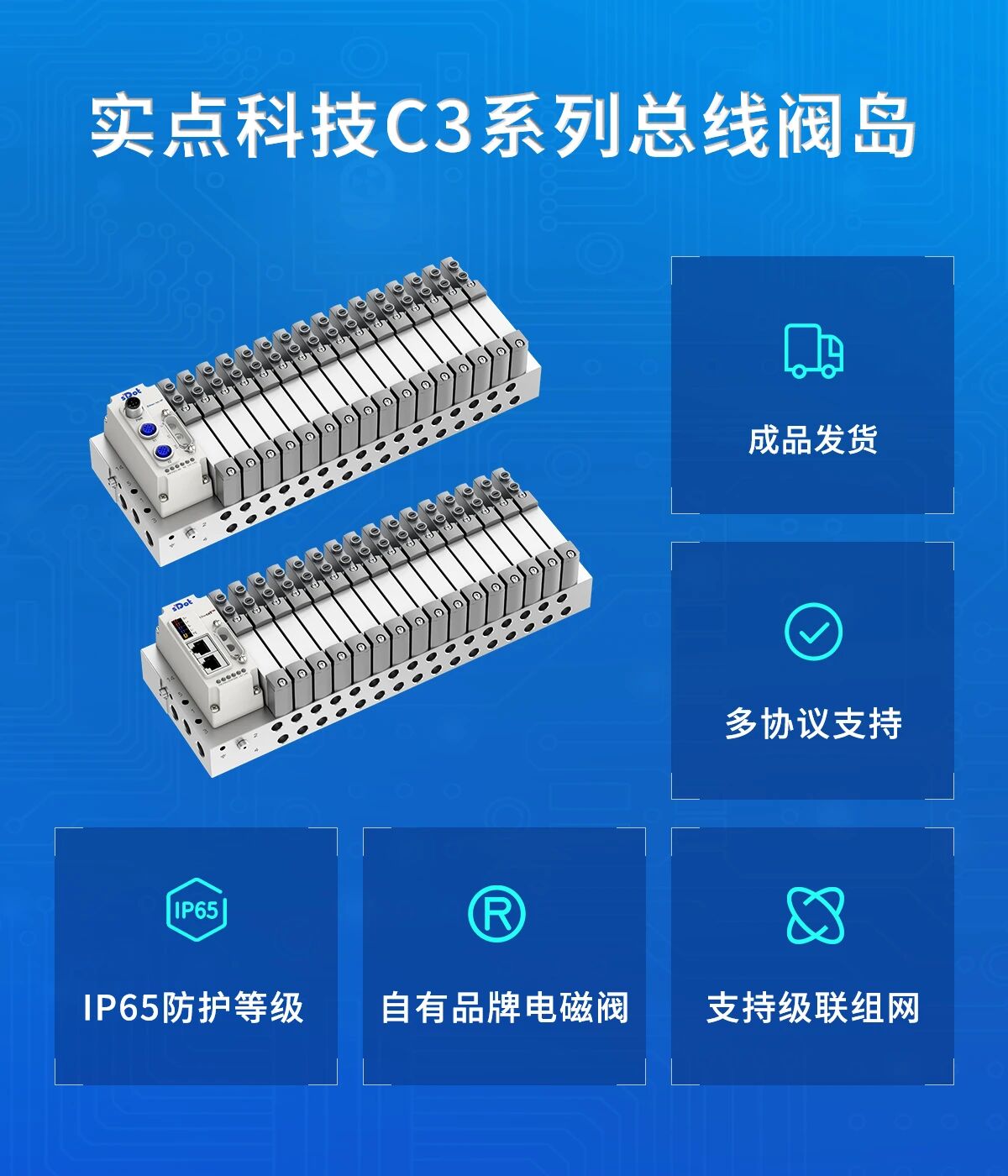
Equipment introduction
The laser cutting blanking production line is centered on a laser cutting machine and is equipped with a dust removal system as well as loading/unloading and sorting units, and is used for cutting and blanking of sheets. The main workflow is as follows:
Process step | Action description |
① Sheet loading | The sheet is conveyed by the loading unit to the cutting table and positioned |
② Laser cutting | The laser cutting head cuts the sheet according to the program |
③ Dust extraction | Extracts the fumes and dust generated by the cutting operation |
④ Blanking and sorting | Cut workpieces are unloaded and sorted by specification |
⑤ Transfer to the next process | Workpieces are transferred to downstream processes such as bending and welding |
Solidot solution
To create a concentrated airflow within a limited space, dust removal uses zone control: the area below the cutting region is divided into several independent damper zones, and when work reaches a given zone, the corresponding damper opens so that the extraction range is concentrated in a local space. The dampers are controlled by solenoid valves, and the more zones there are, the more dampers and solenoid valves are required. If these solenoid valves are arranged centrally in an electrical control cabinet far from the cutting site and then wired to the site circuit by circuit, the number of drop lines to be laid on site increases with the number of valve slices, raising the difficulty of assembly and troubleshooting, and the synchronized response of the dust removal action with the cutting process is also affected by the path length; moreover, the cutting site contains dust, oil mist and moisture, so devices installed on site must have the corresponding protection capability.
The solution uses the Solidot C3 series valve terminal as the centralized control unit for the pneumatic control of the dust removal dampers: the valve terminal has a protection rating of IP65 and is dust-proof and water-proof; the solenoid valve assembly is integrated into the valve terminal, and the air path is distributed centrally inside the valve terminal.
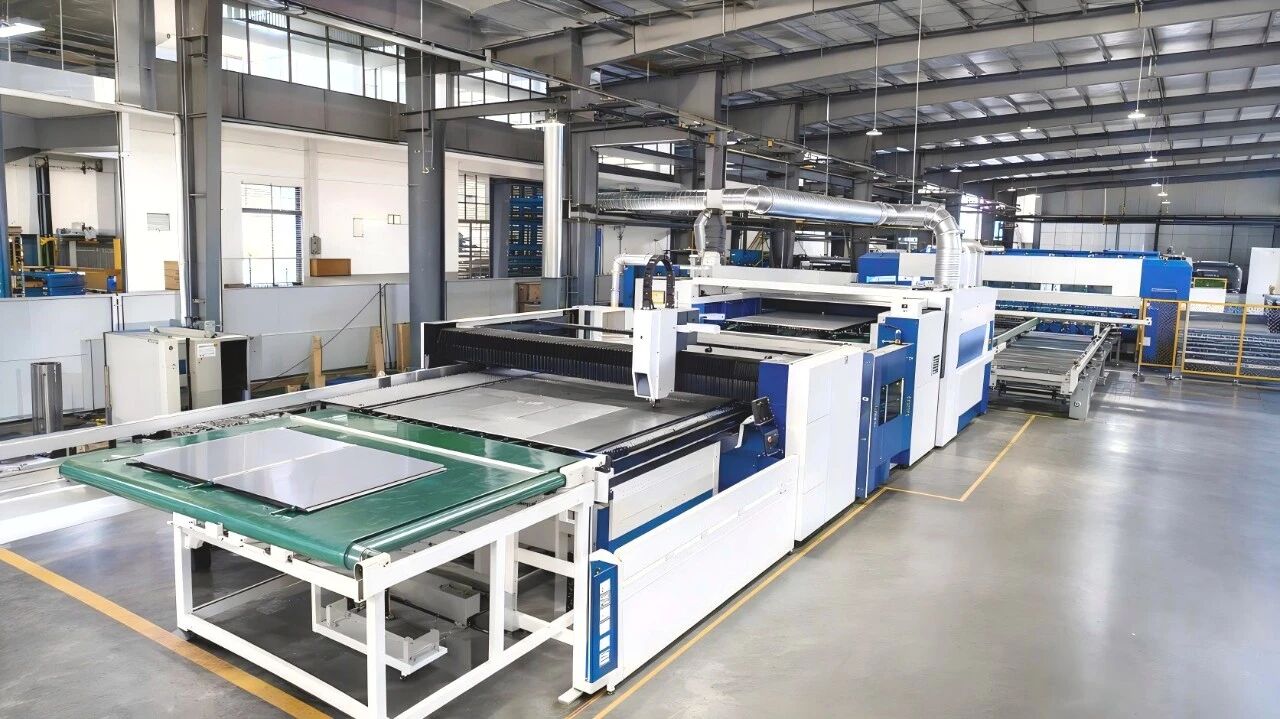
Solution architecture
Control layer:
A Siemens S7-1500 PLC serves as the core controller and is responsible for sequencing the cutting operation and the dust removal action.
Network layer:
The C3 series valve terminal is connected to the PLC via PROFINET; a single bus supports multi-station deployment, and the network structure is clear.
Field layer:
The valve terminal is installed near the dust removal zones, and each valve slice supplies air to the cylinder of the corresponding damper; valve slices are fitted according to the actual number of dampers, and unfitted valve slices are reserved for expansion.
Application results
Dimension | Application Performance |
Wiring optimization | Fewer cables and connectors, reducing assembly and wiring inspection workload |
Site adaptability | Withstands the dust and oil contamination of the cutting site; no separate control cabinet space is required around the equipment |
Maintenance convenience | Solenoid valves can be replaced easily without rewiring, and faults can be located intuitively |
V. Solidot C3 Series Valve terminal
The Solidot C3 Series Valve terminal supports up to 24 Double Solenoid Valves and offers an IP65 high Protection rating for the entire unit, reliably handling harsh industrial environments with dust and oil contamination. The Valve terminal is equipped with the company's own brand Solenoid Valves featuring a low power consumption design and online firmware upgrade capability. It ships as a finished product, and accessory types such as pneumatic fittings can be flexibly configured to suit on-site process requirements. It is compatible with mainstream industrial bus protocols such as PROFINET, EtherCAT and EtherNet/IP.
With outstanding features of high integration, high protection and easy expansion, the C3 Valve terminal is now widely used in automation scenarios with high cycle rates and high reliability requirements, such as automotive manufacturing, 3C electronics and new energy, helping users build stable and efficient pneumatic control systems.