Knowledge

Product Recommendation | alarm codes Direct to the PLC: An Introduction to the Dual Diagnostic functions of the Solidot Series 5 integrated I/O
When on-site faults such as load-side voltage not connected or abnormal output on an output channel occur, how can alarm information be seen immediately and handled in time? The Solidot Series 5 integrated I/O module offers two diagnostic functions to help users stay on top of alarms and quickly locate faults.
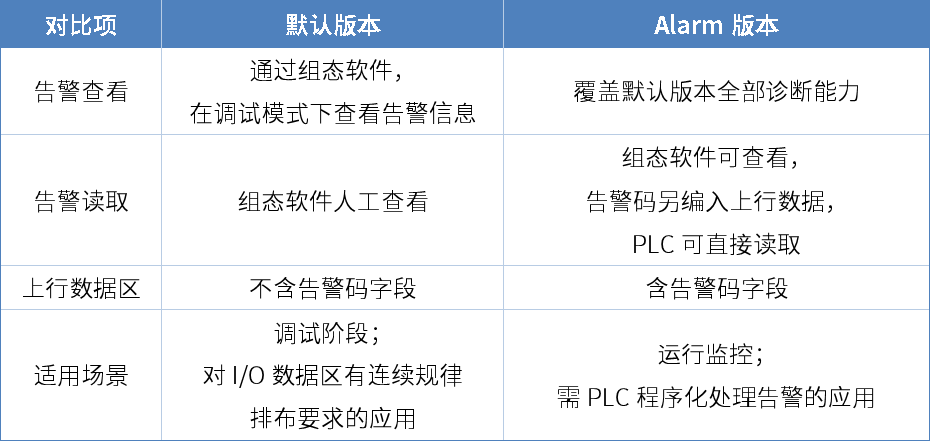
Every module supports two diagnostic functions. In the default version (0 DIP switch in its default position), alarm information can be viewed in commissioning mode via the configuration software, meeting the needs of device commissioning and routine maintenance. The alarm version (0 DIP switch set to ON) fully retains the diagnostic capabilities of the default version while additionally encoding alarm codes directly into the module's upstream data, so the PLC can read alarm information without configuration software, enabling real-time monitoring and programmatic handling of alarms.
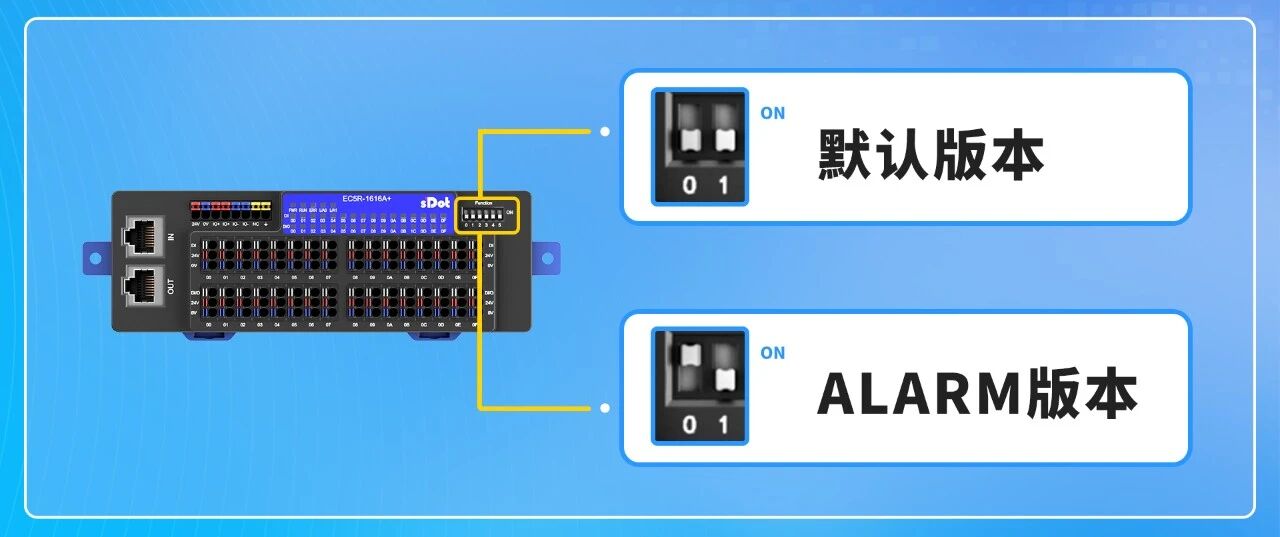
The diagnostic version of the module is determined by the 0 DIP switch: the default position selects the default version, and setting it to ON selects the alarm version. After switching versions, the entire group of modules must be powered off and on again for the new setting to take effect. The diagnostic capabilities of the two versions are compared below:
How to choose between the two versions?
The alarm version includes an additional alarm code field in the upstream data, so for applications that require a continuous, regular layout of the I/O data Area, the default version's data Area is more compact; for applications that require the PLC to read alarms directly and implement programmatic monitoring and handling, the alarm version is more convenient.
How to use the two versions?
1. Default version
No additional configuration is required. Enter commissioning mode via the configuration software to view module alarm information on the alarm information page, making it easy to quickly confirm alarm status during commissioning and routine maintenance.
2. Alarm version
With alarm codes encoded into the upstream data, the PLC can obtain alarm information just like ordinary I/O data and implement programmatic handling on that basis:
● Runtime monitoring: when a fault occurs, the alarm code is reported in real time, and the PLC detects the on-site abnormality immediately
● Programmatic handling: execute alarm notification, interlock control and other logic based on the alarm code, with no need to check each module manually
● Reduced commissioning dependency: module alarm status can be monitored without opening the configuration software
Alarm codes cover common fault scenarios such as load-side voltage not connected, abnormal output on an output channel, firmware errors and parameter setting errors, and are divided into two categories:
● protocol alarm code: alarms related to protocol communication
● process data alarm code: alarms related to the on-site process (e.g. load-side voltage not connected)
That concludes this introduction to the dual diagnostic functions of the Solidot Series 5 integrated I/O. If you have any questions, feel free to contact us — we will be glad to assist you!