Knowledge

This article will show you the 7 major advantages of IO-Link
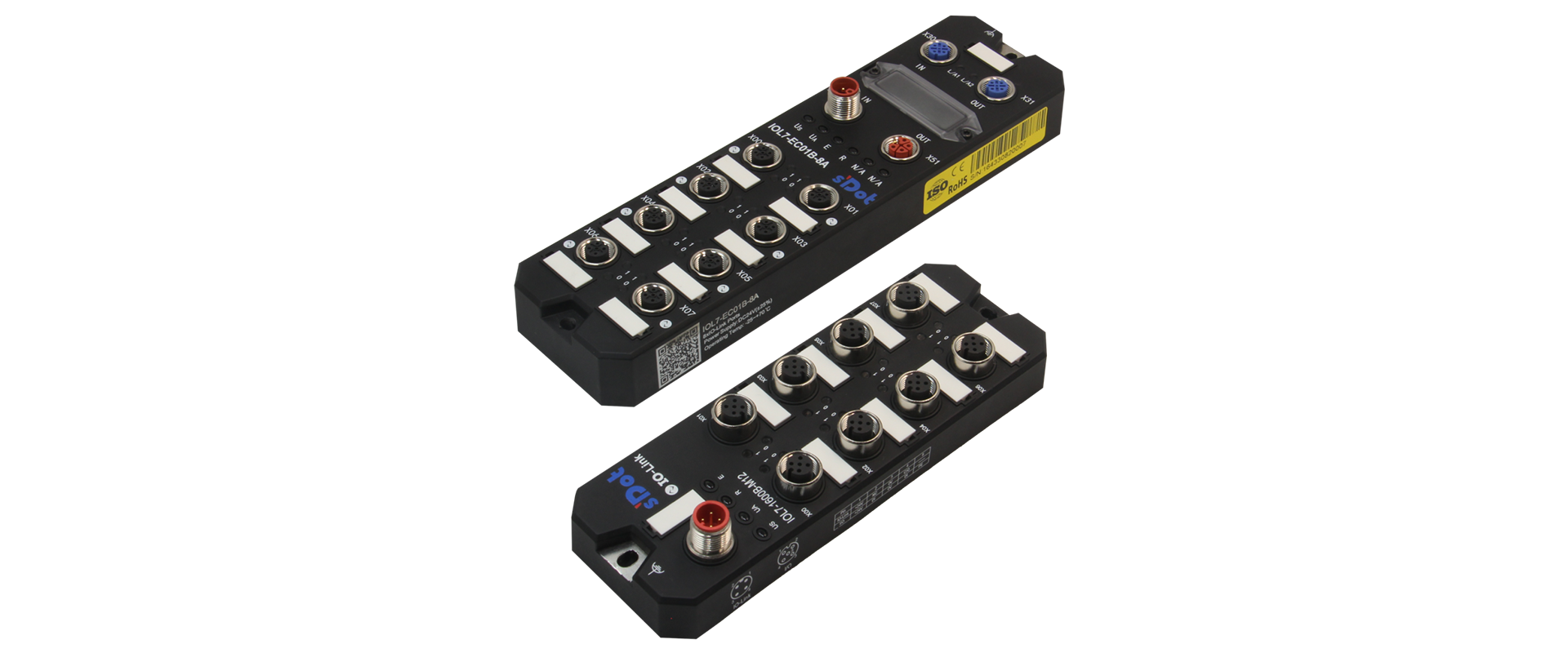
↑ SDJ Technology IO-Link master and slave
Advantage 1: Open and compatible
IO-Link technology is based on the open IEC 61131-9 communication protocol, which was jointly proposed by all mainstream automation manufacturers. Therefore, field sensors and actuators can send and receive data via IO-Link and convert it into mainstream protocols such as PROFINET, PROFIBUS, EtherCAT, and EtherNet/IP.
Advantage 2: Unified interface
The IO-Link Standard uniformly defines the communication interface standards from the host computer to the master and from the master to the slave.
Advantage 3: Simplified wiring
IO-Link simplifies circuit connections, requiring only one standard cable for operation, which greatly reduces the difficulty of on-site wiring layout and makes the wiring network simpler.
Advantage 4: Precise transmission
Connecting traditional analog sensors to the analog input of the IO-Link master/slave allows the analog signal to be converted into an IO-Link communication signal over the shortest possible distance at the end of data acquisition, thereby reducing electromagnetic interference and accuracy loss during transmission.
Advantage 5: Remote configuration
Smart sensors using IO-Link technology support remote parameter setting from a PC, which saves device operation time, reduces fault costs, and greatly improves debugging convenience.
Advantage 6: Efficient identification
The IO-Link master can obtain the Vendor Information of the connected IO-Link sensor, such as the serial number and model. After the identification function is activated, if a different sensor is incorrectly connected, the system will trigger a corresponding error alarm, effectively preventing subsequent damage caused by incorrect product connections.
Advantage 7: Easy replacement, easy maintenance
In an overall automation system, combined with the characteristics of the IO-Link master, it becomes easier to locate faults using IO-Link technology. The Diagnostics provided by each smart device also help narrow down the problem scope and speed up the recovery process, even allowing technicians to grasp the key issue and prepare a solution before arriving at the equipment site, thereby saving fault recovery time.