Knowledge

Disassemble layer by layer to help you better understand the bus valve island
The bus valve island is a control device composed of a communication module and a pneumatic module, which is used to control the solenoid valve and its signal processing. It is named as a valve island because it looks like an island.
The bus valve island has two submodules, namely the communication module and the pneumatic module. Let's disassemble them separately.
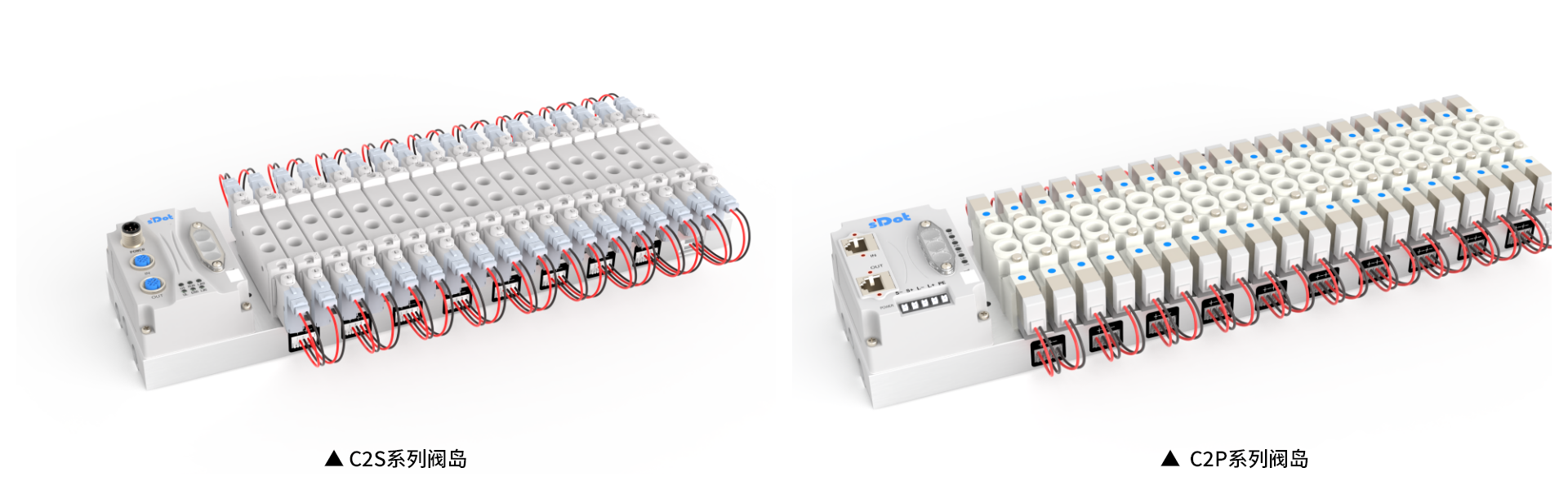
1. Communication module
First, let’s talk about the communication module, which plays the role of communication and control:
The communication part is connected to other fieldbus devices through a specific interface, such as a programmable logic controller (PLC) and a distributed I/O system. Currently, the most common interfaces are M12 and RJ45. Common fieldbus protocols include PROFINET, EtherCAT, EtherNet I/P, CC-Link IE Field Basic, etc.
The main function of the control part is to control the action of the solenoid valve and monitor the working status of the solenoid valve, send the commands received by the communication part, and report the status of the solenoid valve to the communication module.
The bus valve island relies on this module to realize automation from process valve to control level.
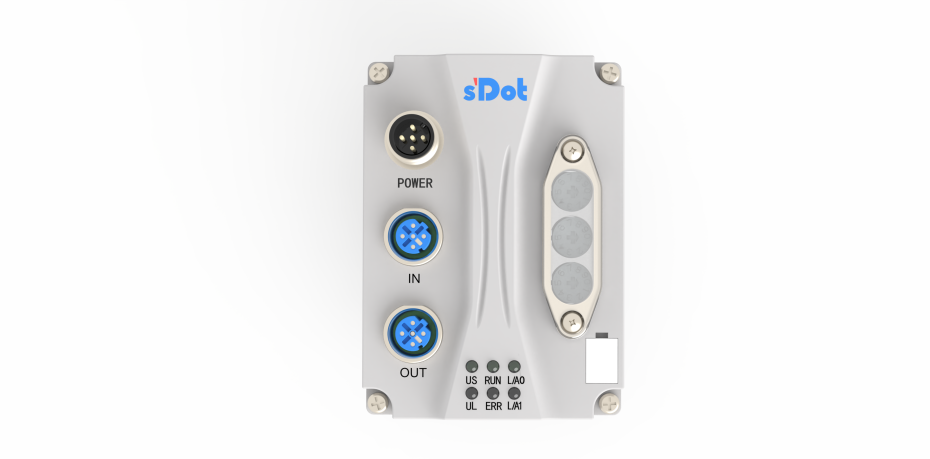
↑ Communication module
2. Pneumatic Module
Next, let me introduce the pneumatic module, which mainly consists of two parts: the manifold and the solenoid valve:
The manifold is also called the gas manifold. Its main function is to distribute the unified gas source (such as compressed air) and power supply to multiple solenoid valves. It is generally composed of three channels that run through it, one for the air inlet and two for the air outlet.
Solenoid valves are actuators used in industrial control systems to adjust the direction, flow, speed and other parameters of gas.
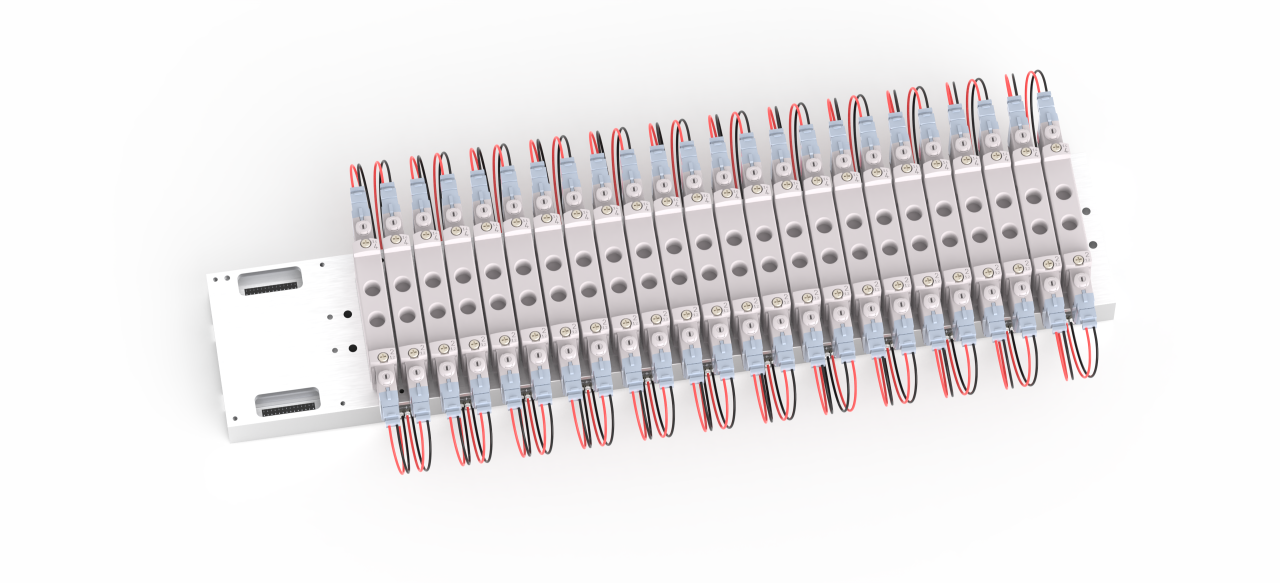
↑ Manifold and solenoid valve
With the help of the above two modules, the electrical, pneumatic and mechanical functions can be integrated together to make it a pneumatic and electrical integrated control device.
The emergence of bus valve island reduces the difficulty of solenoid valve wiring and greatly simplifies system debugging, performance testing, diagnostic maintenance and other tasks, and has broad application prospects.