Knowledge

Wiring method of each line current sensor and analog current input module
This article uses Shidian Technology's XB6 Series Slice I/O analog module XB6-A80I as an example to explain in detail the wiring methods of current sensors with different wiring systems and analog current input modules.

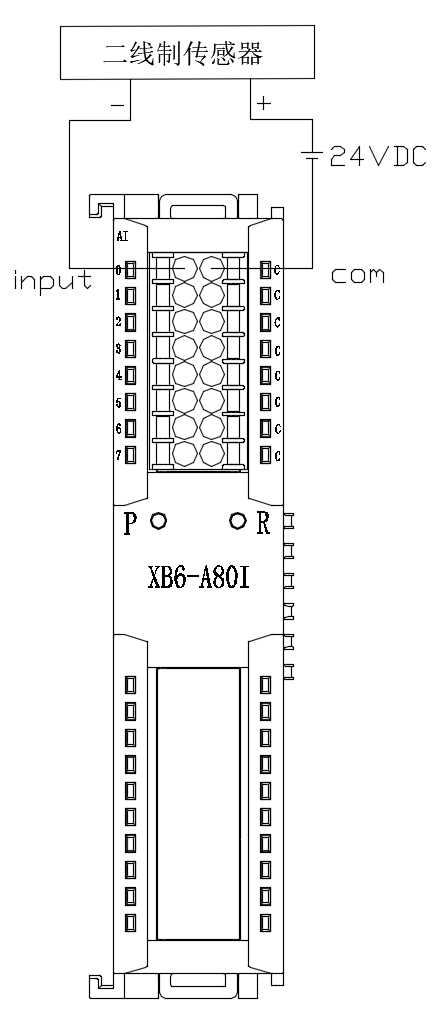
I. Two-wire current sensor
A two-wire sensor is a passive sensor, in which the two wires transmit both power and signal; that is, the sensor load and the externally supplied 24 V DC power are connected in series to form a current loop.
The path forming the current loop is: external 24 V -> Sensor+ -> Sensor- -> AI module+ (input) -> AI module- (com) -> external 0 V
II. Three-wire current sensor
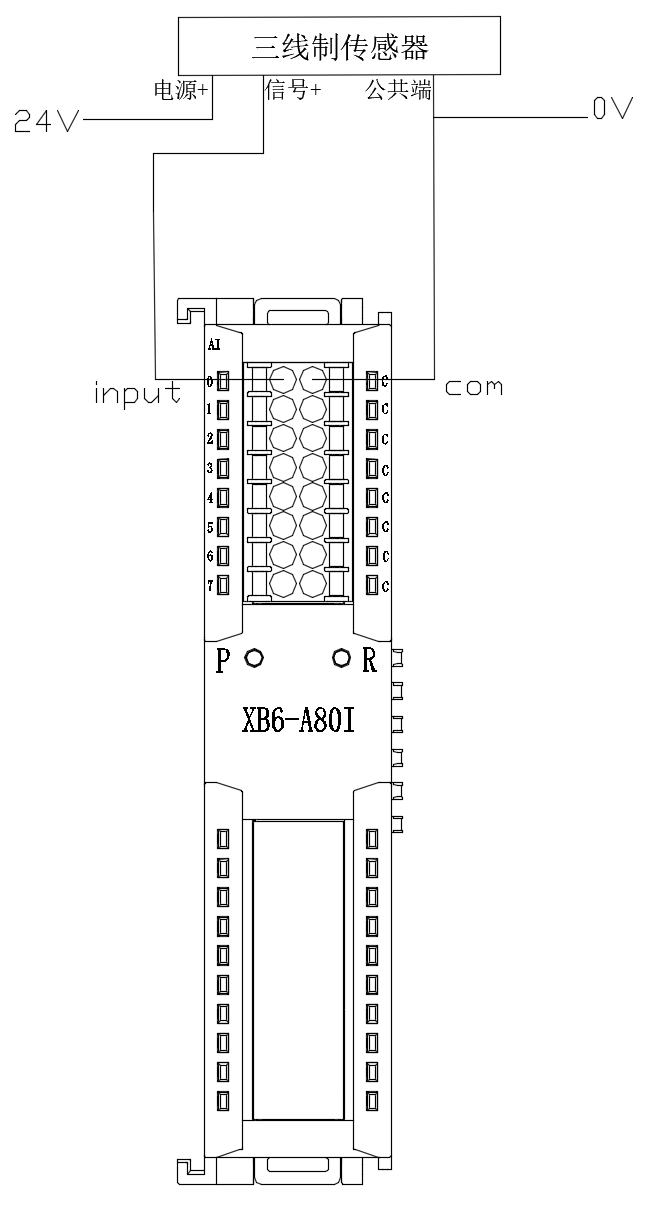
A three-wire sensor is an active sensor, with three wires: Power+, Signal+, and Power-/Signal- combined as the Common terminal.
When wiring, connect Power+ to an external 24 V, connect Signal+ to AI module+ (input), and connect both AI module- (com) and the sensor's common terminal to an external 0 V at the same time to form the current and signal loops.
III. Four-wire current sensor
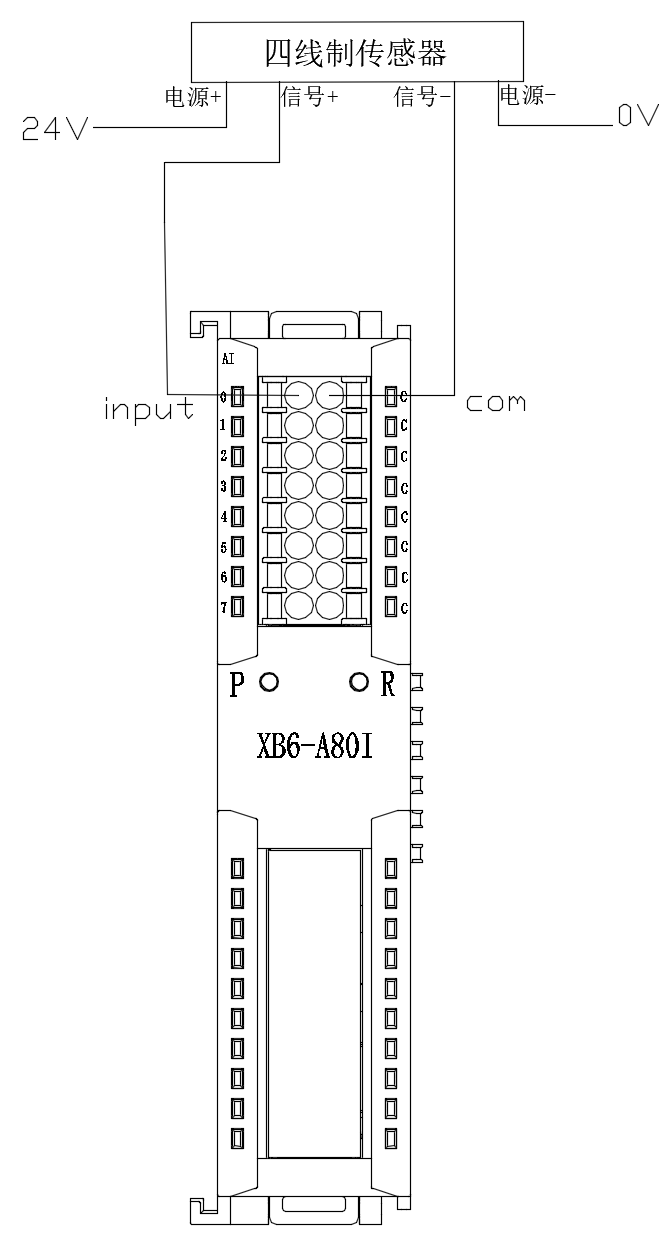
A four-wire sensor is an active sensor, with four wires: Power+, Power-, Signal+, and Signal-.
When wiring, connect Power+ to an external 24 V and Power- to an external 0 V to supply operating power to the sensor and form the current loop; connect Signal+ to AI module+ (input) and Signal- to AI module- (com) to form the signal loop.